
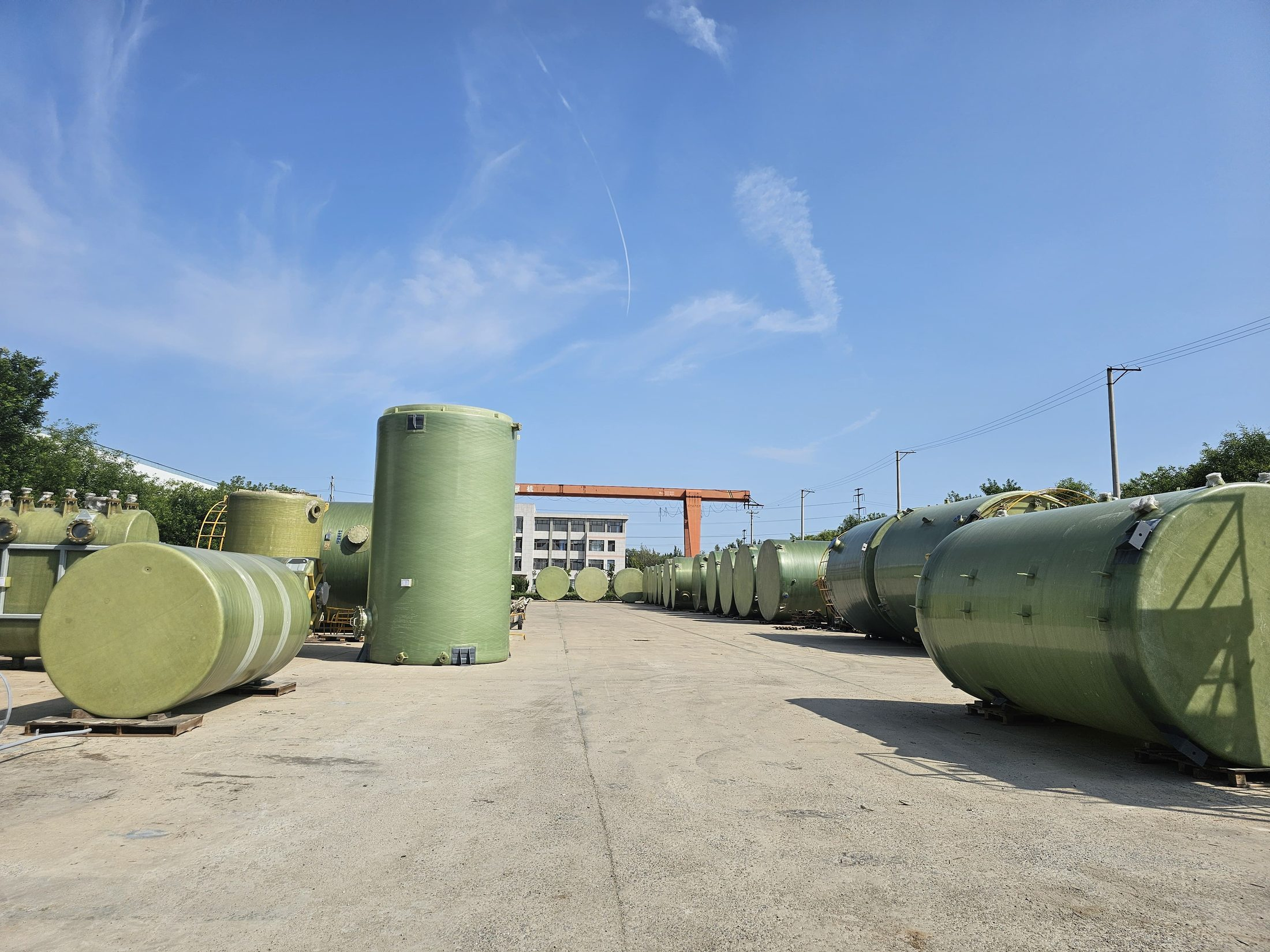
FRP tanks, ductwork and process equipment, built in China.
SBCCO-China supplies custom-fabricated FRP and GRP equipment — tanks, ductwork, piping, scrubbers, dampers, covers, gratings, towers and expansion joints — to mines, smelters, refineries, chemical plants and water treatment works worldwide. Shop-fabricated or field-wound to 15 m diameter, in ISO 9001 facilities, to ASTM D3299, D4097 and ASME RTP-1.
01 / What we supply
Nine FRP product families, all custom-fabricated.
Almost nothing here is a catalogue item. Resin system, reinforcement schedule, corrosion barrier and structural thickness are selected for your operating environment — chemistry, temperature, pressure, abrasion and external loading — and then approved by you before fabrication starts.
FRP Tanks
Storage, mix, overflow, pump and process tanks. Filament wound or contact moulded, flat or dished heads, with agitator bridges, nozzles and internals to your drawing.
FRP Ductwork
Round and rectangular off-gas ductwork for smelters, acid plants and FGD systems, including transitions, elbows, stiffeners and support saddles.
FRP Piping
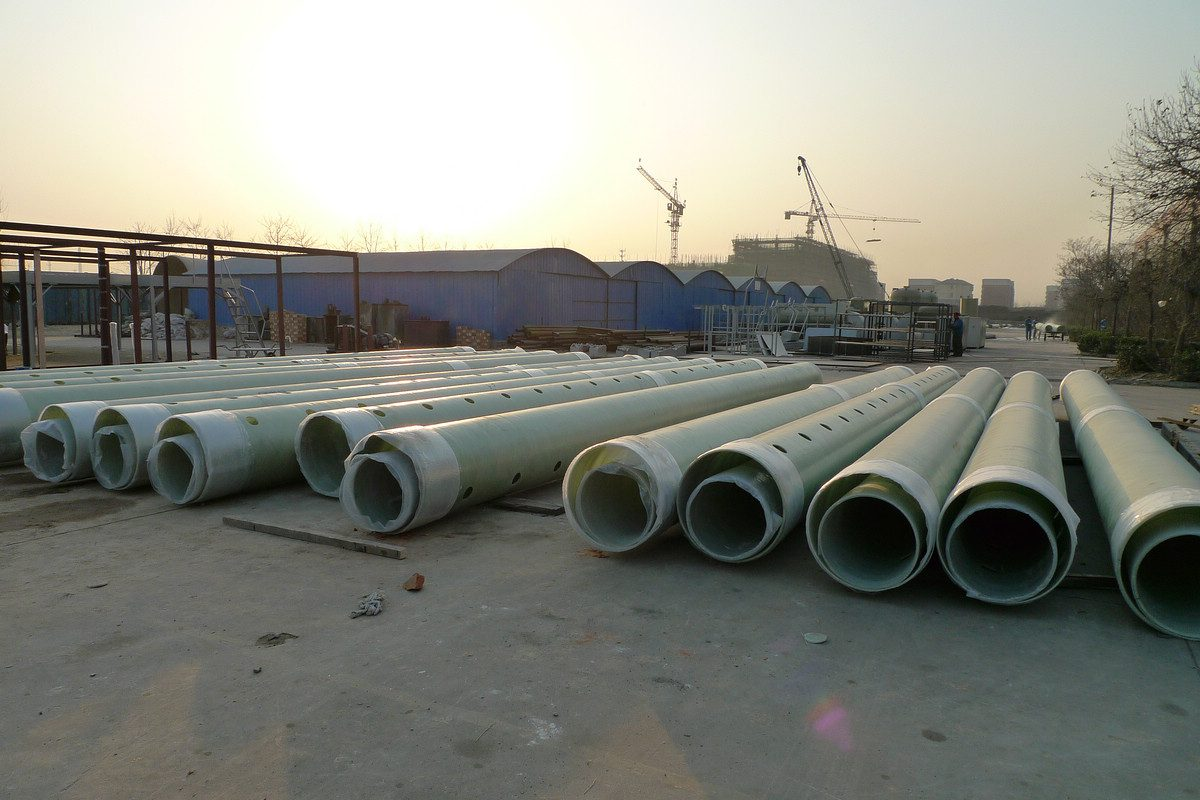
Process and distribution piping from 2″ to 84″, with flanged, butt-and-strap or bell-and-spigot joints and full fitting range.
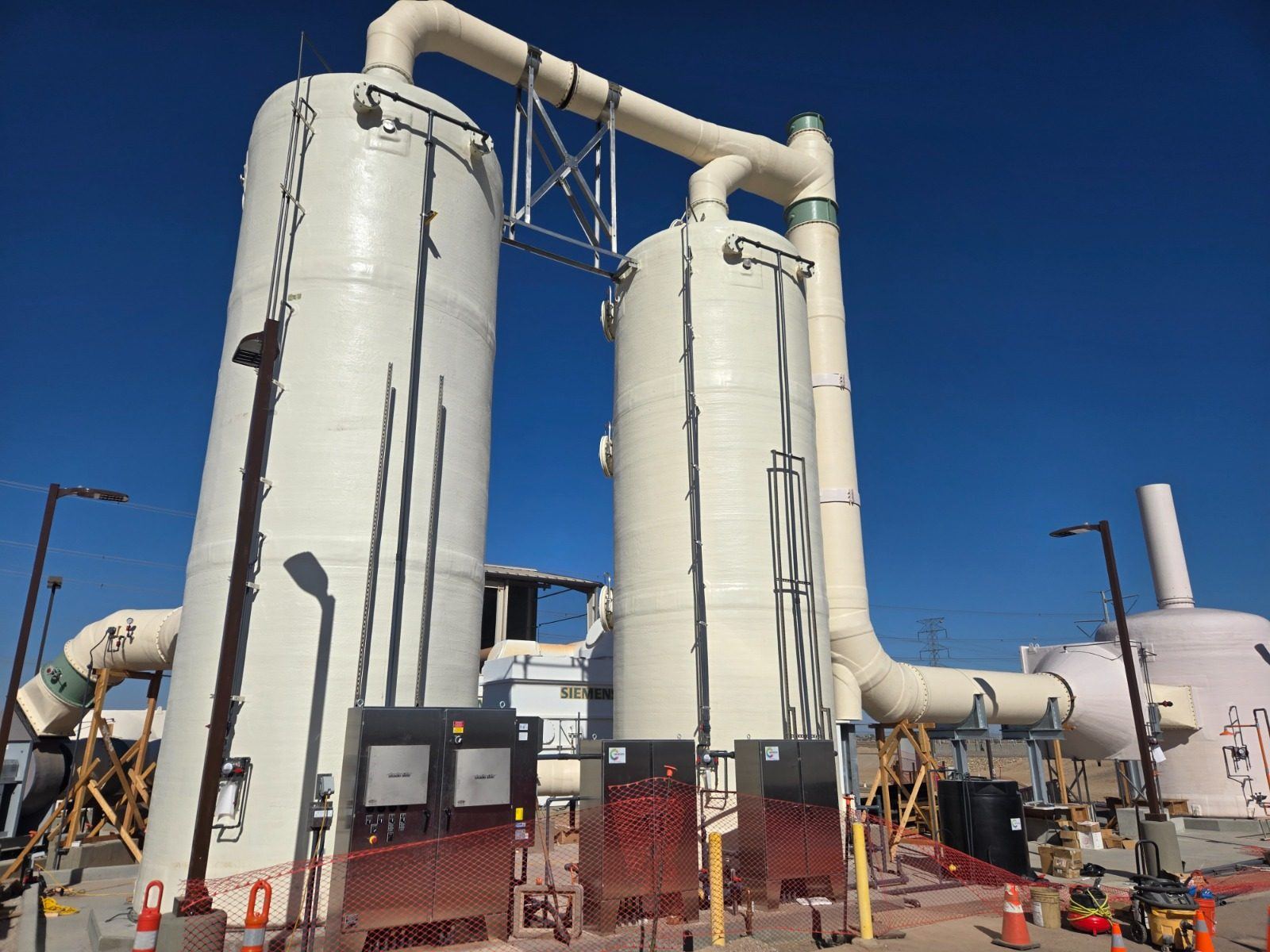
FRP Scrubbers
Packed-bed and venturi scrubbers with FRP internals, spray headers, mist eliminators and recirculation tanks for acid gas and odour control.
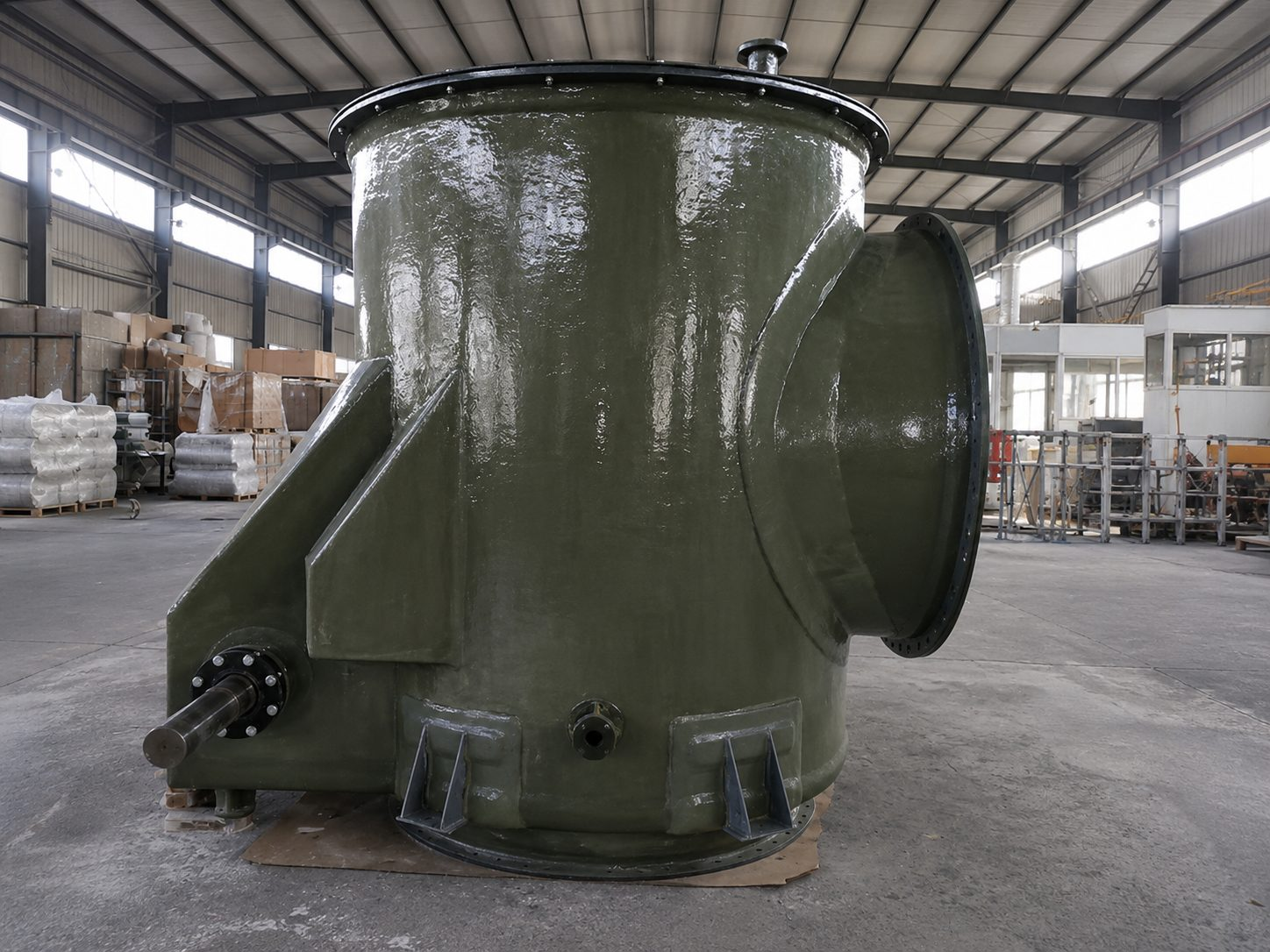
FRP Dampers
Butterfly, louvre and guillotine dampers in FRP or FRP-lined steel for corrosive flue gas duty, manual or actuated.
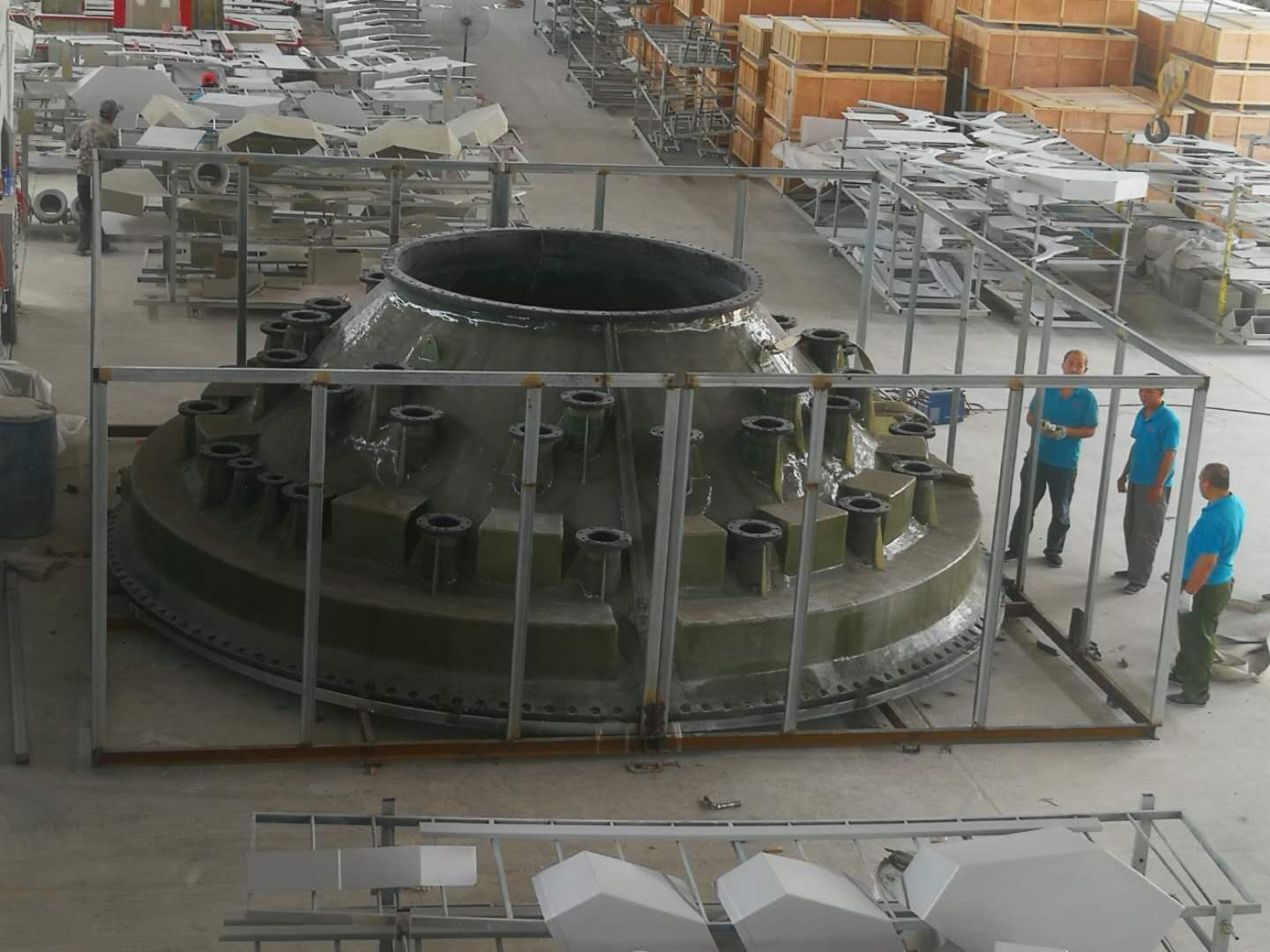
FRP Covers
Thickener, clarifier, launder and cooling tower covers — including hot acid service — engineered for wind, snow and live loads.
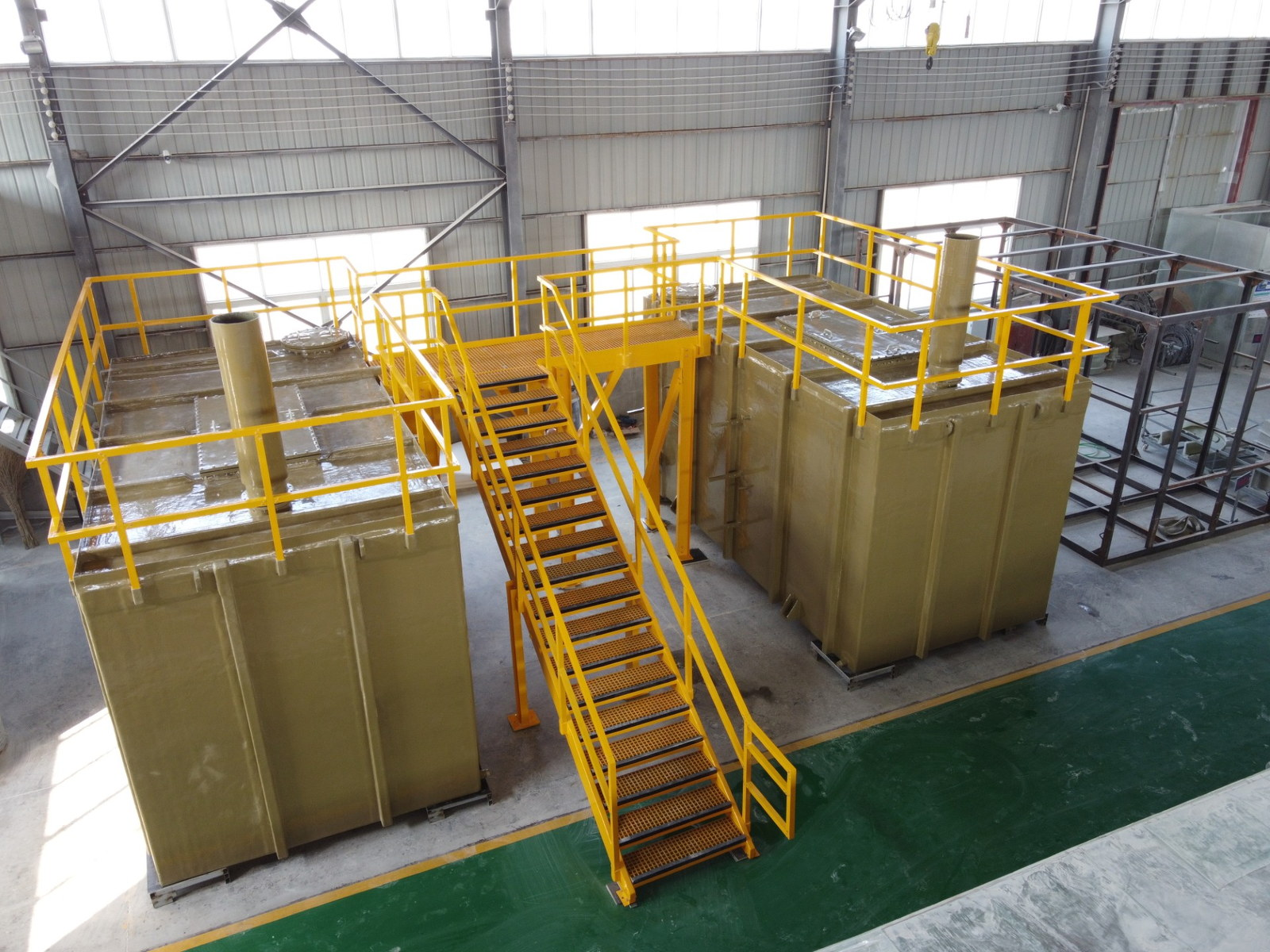
FRP Gratings & Handrail
Moulded and pultruded grating, stair treads, ladders and handrail systems for corrosive and non-conductive environments.
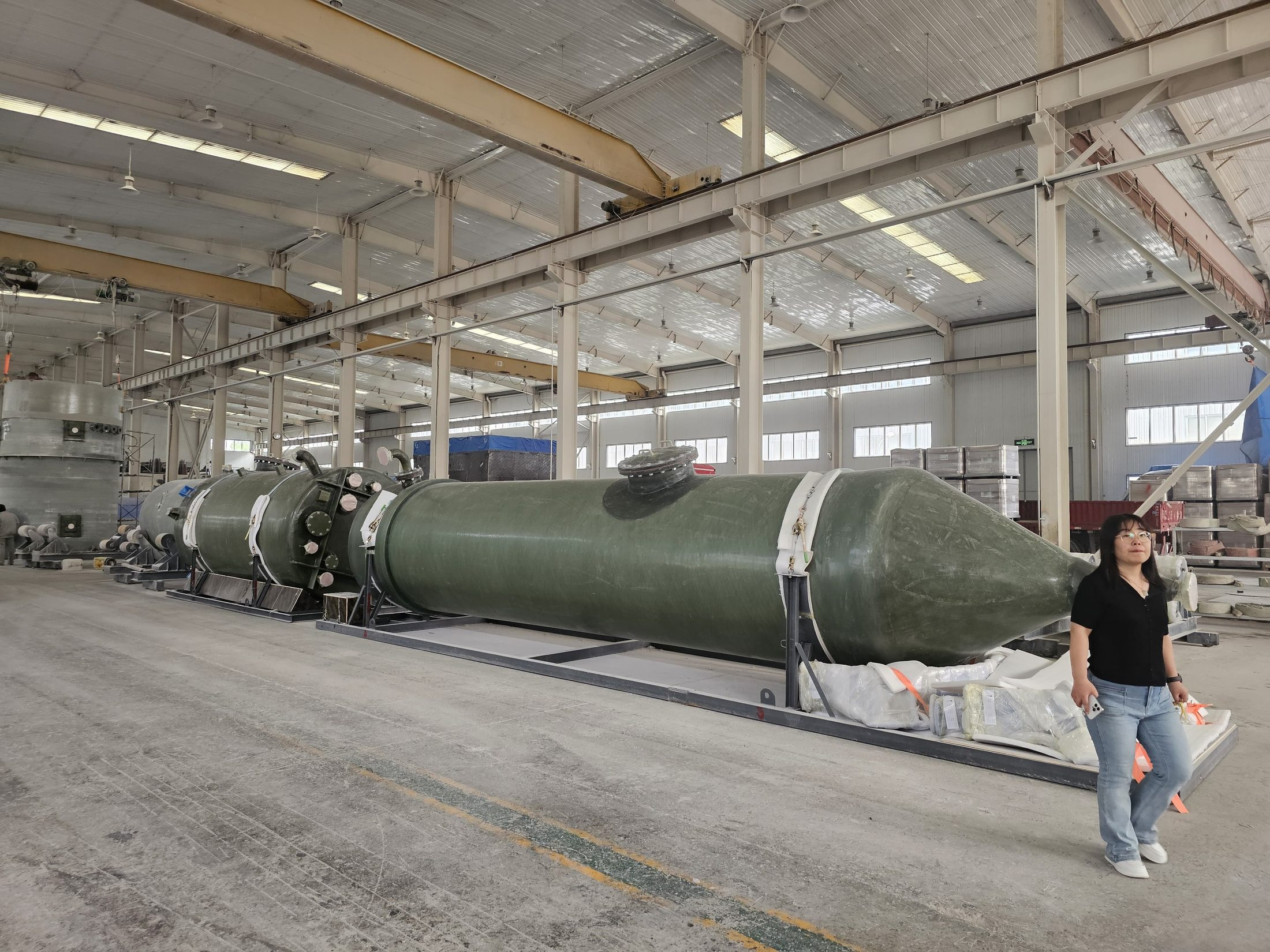
FRP Towers & Columns
Absorption, stripping and acid wash columns with internal supports, distributors and packing retention.
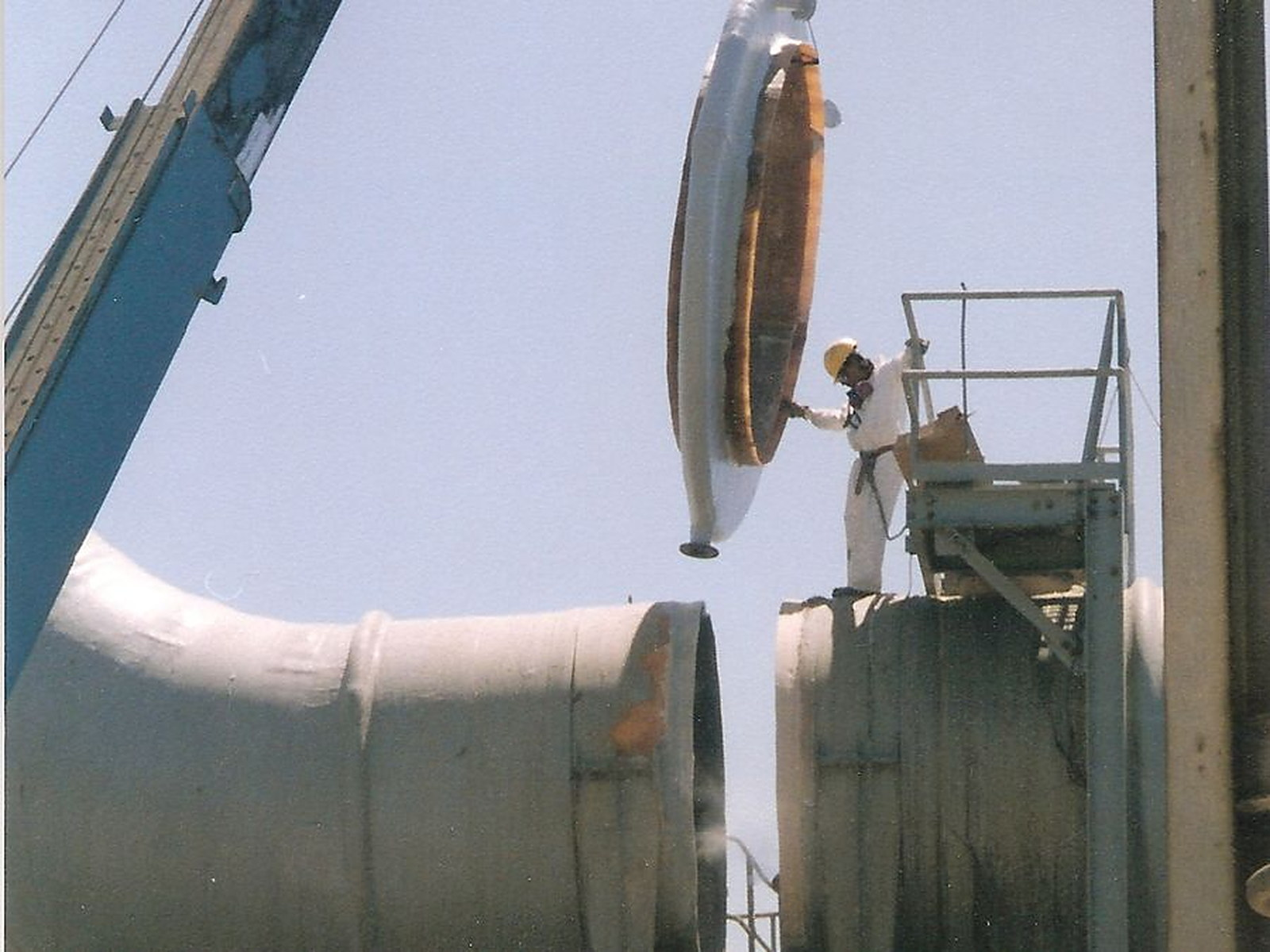
FRP Expansion Joints
Flue gas and process expansion joints to absorb thermal movement and misalignment in FRP and lined duct runs.
02 / Specification
What we can build, in numbers.
If your duty falls outside this envelope, say so in your enquiry — we will tell you honestly whether it is something our shops should be building.
| Maximum diameter | 15 m. Shop-fabricated where transport allows; field-wound and assembled on your site where it does not. |
|---|---|
| Piping range | 2″ to 84″ nominal diameter, flanged, butt-and-strap or bell-and-spigot |
| Construction methods | Filament winding, contact moulding, hand lay-up, and combinations for heads, nozzles and internals |
| Resin systems | Isophthalic polyester, bisphenol-A fumarate, vinyl ester (Derakane and equivalents), novolac vinyl ester for high-temperature acid duty |
| Reinforcement | C-glass or synthetic surfacing veil corrosion barrier, chopped strand mat, woven roving, continuous filament |
| Design & fabrication standards | ASTM D3299 (filament wound), ASTM D4097 (contact moulded), ASTM C-582, ASME RTP-1. BS 4994 / EN 13121 on request. |
| Facilities | ISO 9001 approved fabrication shops, audited and used by SBCCO-China since 2006 |
| Inspection | In-house QC as standard. TÜV Rheinland, Bureau Veritas, ABS or Moody where the contract calls for it. Your own inspector welcome at any stage. |
| Documentation | Data book per major item: material of construction certificates, QC reports, third-party inspection reports, as-built drawings |
| Typical service | Sulphuric and hydrochloric acid, caustic, chlorides, SX-EW organics and electrolyte, smelter off-gas, flue gas desulphurisation, seawater, potable water, municipal and industrial wastewater |
03 / Fabrication
How a vessel is built decides whether it fits when it lands.
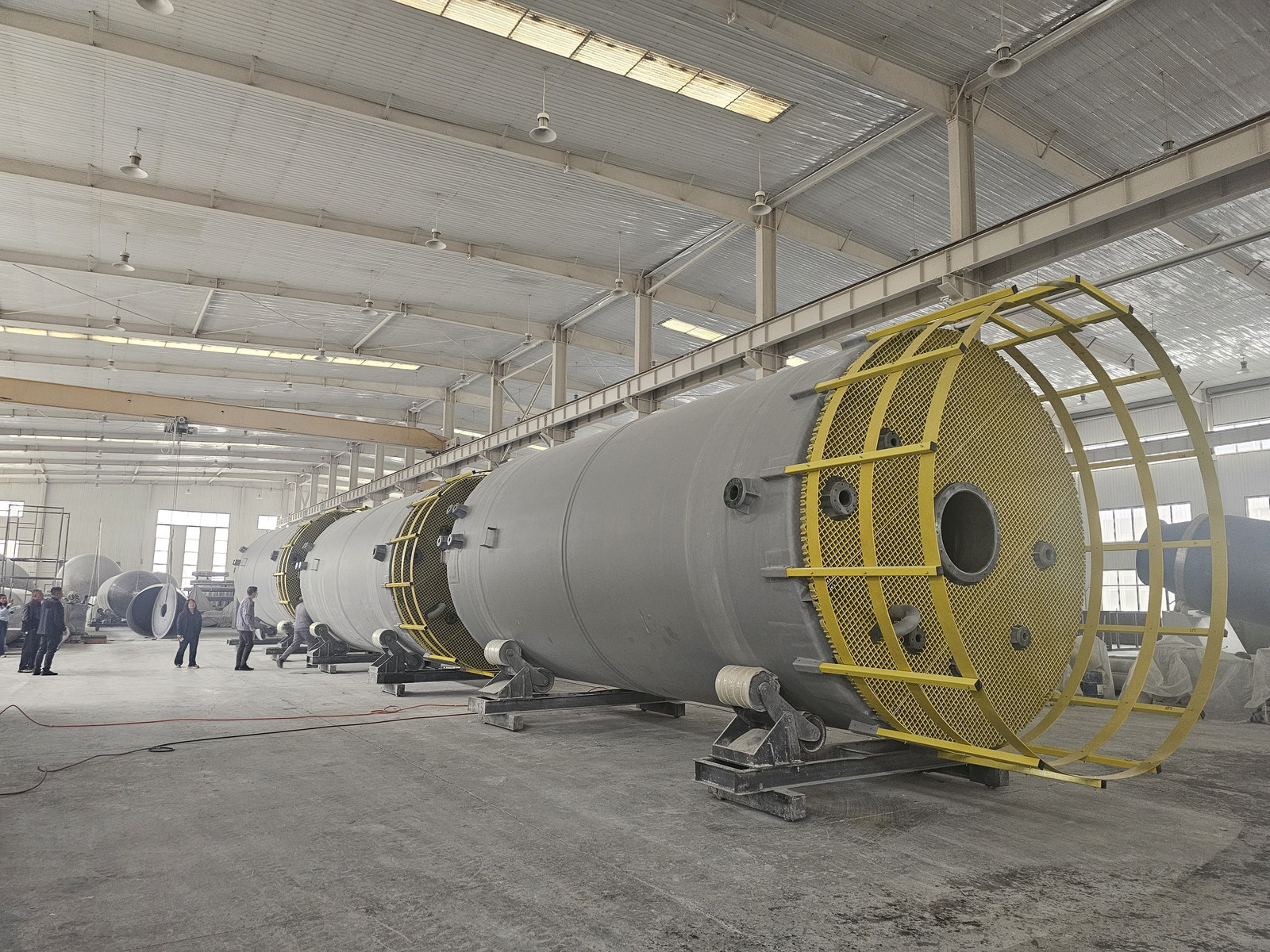
Diameter, road width and crane access decide whether something is wound in the shop or wound on your site. We settle that before the drawing is frozen, because it changes the laminate schedule, the joint detail and who does the work on your ground.
Shop-built
Wound over a corrosion barrier that is laid by hand first.
The liner does the chemical work — a resin-rich corrosion barrier of surfacing veil and chopped strand, applied against the mandrel before the winder starts. The wound structural wall above it carries the load, at the winding angle the design case calls for.
Shop-built means one place, one QC file, one set of hold points, and the vessel leaves complete. It also means road and port transport set the ceiling on diameter.
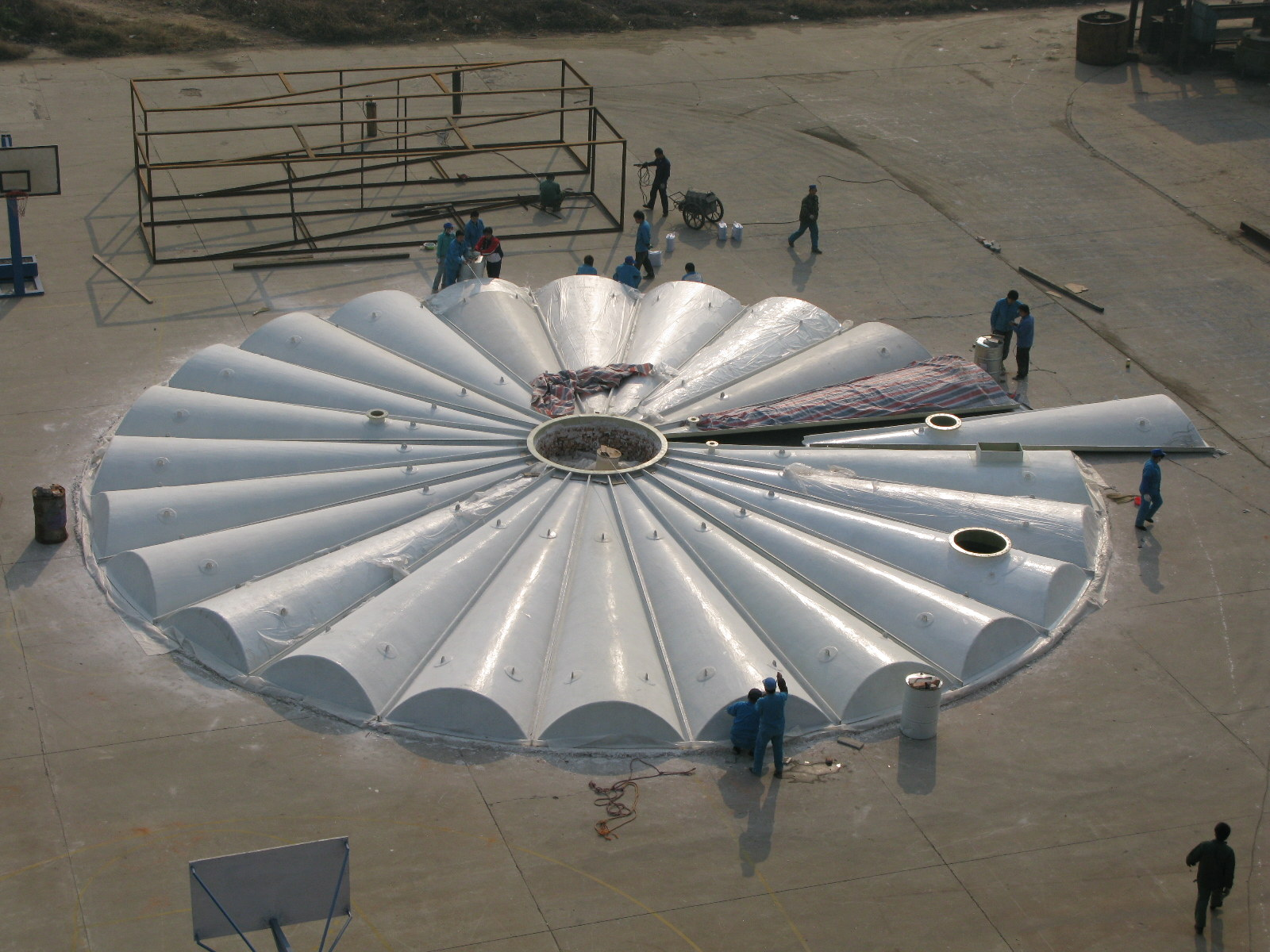
Trial assembly
Anything that ships in segments is bolted together once here, before it ships.
Covers, launders, large ducts and field-erected shells are laid out and assembled in the yard. Bolt holes are checked against the mating part rather than against the drawing alone, and every segment is match-marked before it comes apart.
It costs a day of yard time. That is cheaper than a crane crew standing on your site while somebody re-drills a flange.
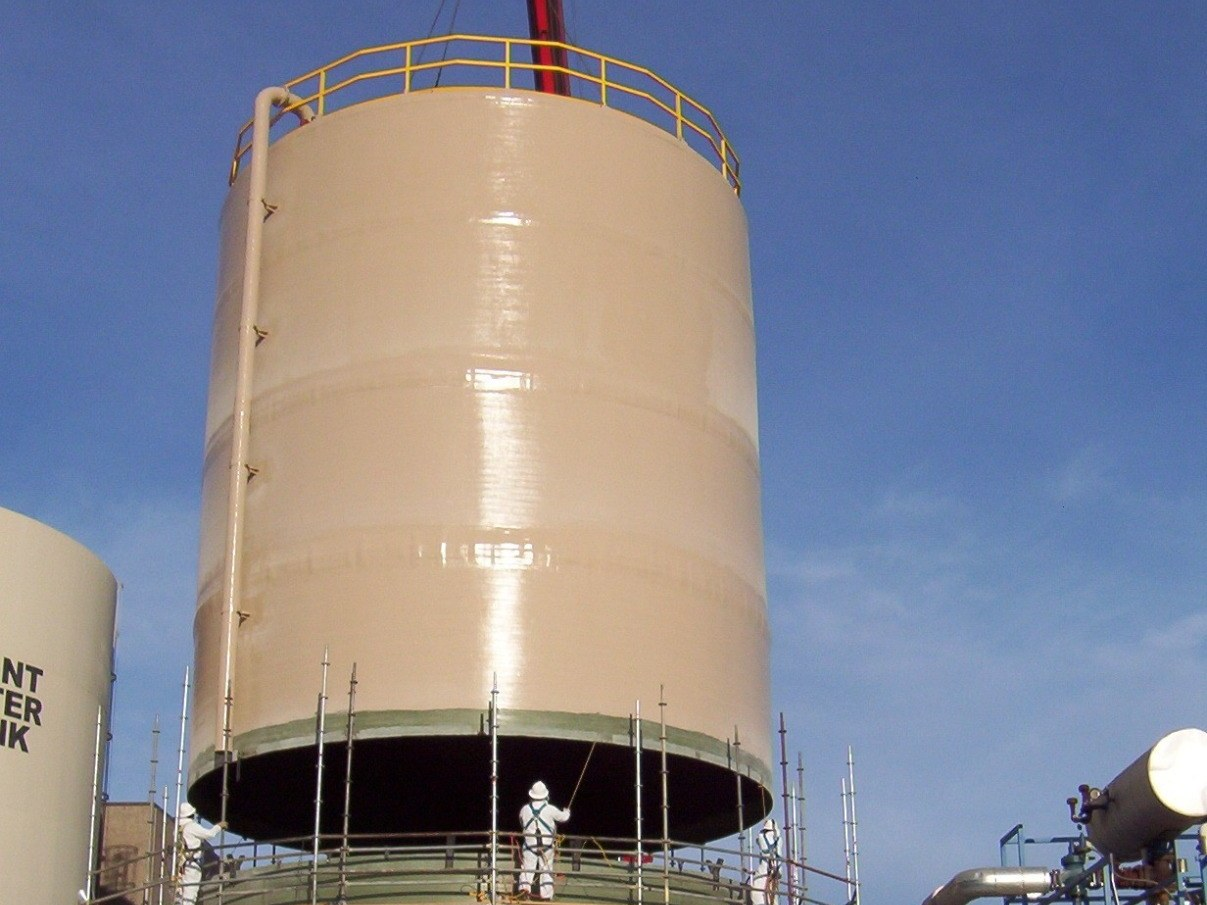
Field-erected
Where the tank is wider than the road, it gets built where it stands.
Shell courses are wound or laid up and joined in position, with the top head lifted on last. Joints are laminated and cured on site to the same schedule as the shop work, either by the fabricator’s erection crew or by your own contractor working to the fabricator’s procedure.
Diameters up to 15 m are practical this way. Foundation, access and crane availability usually drive the programme more than the laminate does.
Built-in options
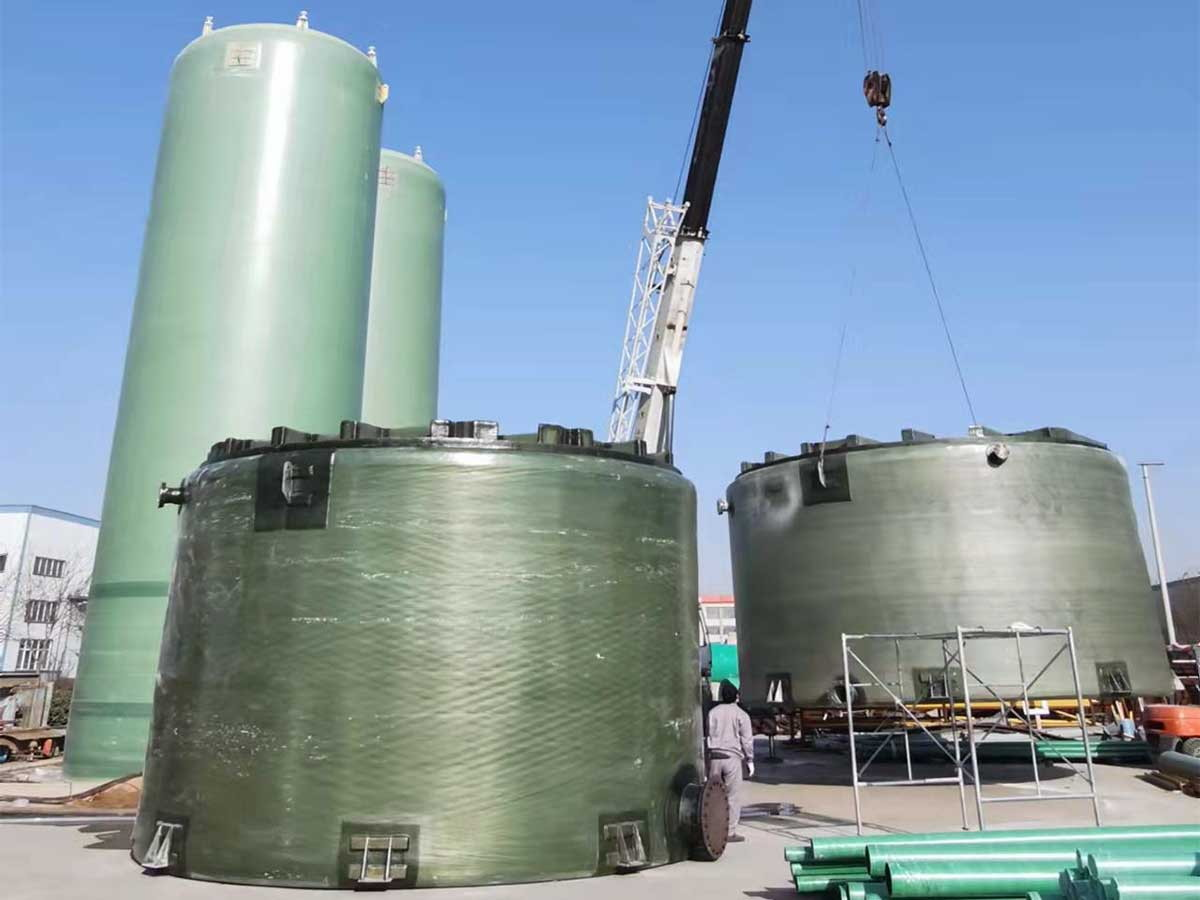
Insulated and double-walled, where the chemical or the climate asks for it.
An outer shell over an insulation layer holds a stored chemical inside its working temperature, and gives you a second containment envelope around the primary tank. Annulus leak detection, heat tracing and external structural rings are drawn on the same general arrangement where the duty needs them.
The tanks in this photograph are insulated double-wall aluminium sulphate storage tanks.
04 / Material selection
The resin decides whether the tank lasts twenty years or two.
More FRP equipment fails from a resin chosen on price than from anything that happens on the shop floor. Tell us the chemistry, the concentration, the operating and excursion temperatures, and whether there is abrasion or vacuum, and our engineers will specify the laminate — and put the reasoning in writing so your engineers can check it.
Corrosion barrier first
A resin-rich liner of surfacing veil and chopped strand mat — typically 2.5 mm — is what actually resists the process fluid. The structural laminate behind it carries load, not chemistry.
Then the structural laminate
Thickness and winding angle are calculated for hydrostatic head, vacuum, wind, seismic and any agitator or nozzle loads, not copied from the last job.
Then the temperature check
Heat distortion temperature has to sit above the excursion temperature, not the normal operating temperature. This is the most common specification error we correct at quotation stage.
Then the joints and nozzles
Most field failures start at a nozzle, a flange face or a field joint. We detail these on the approval drawing so there is nothing left to shop interpretation.
05 / Delivered
FRP equipment already running in the field.
These are our own photographs, taken in the shops that built them and on the sites that operate them. We name the customer because they agreed we could.
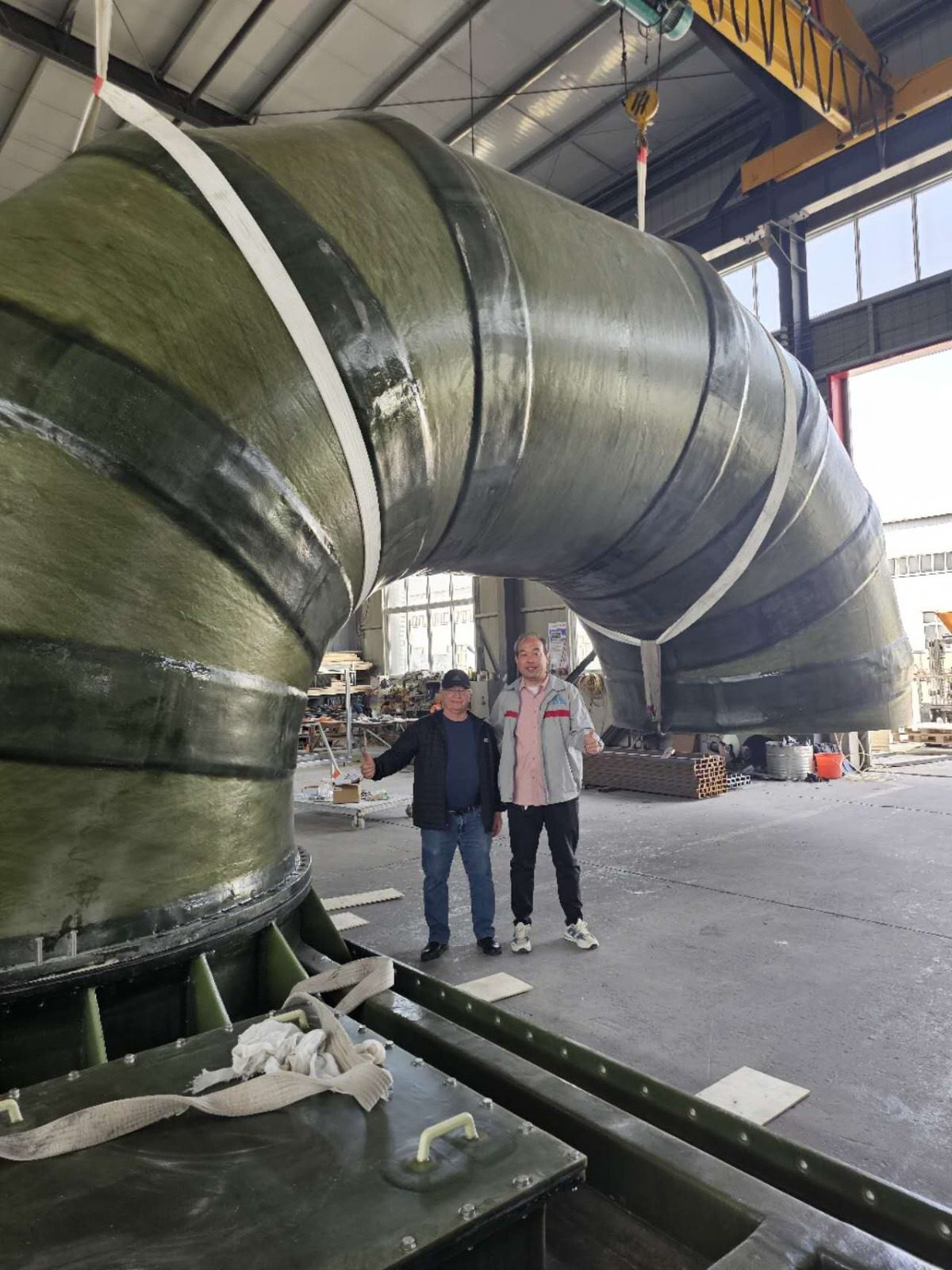
FRP smelter off-gas ductwork
Large-diameter corrosion-resistant ductwork for smelter off-gas service, shop-fabricated and shipped in sections.
FRP acid wash column
Acid wash column fabricated to customer drawing with internal supports and distribution.
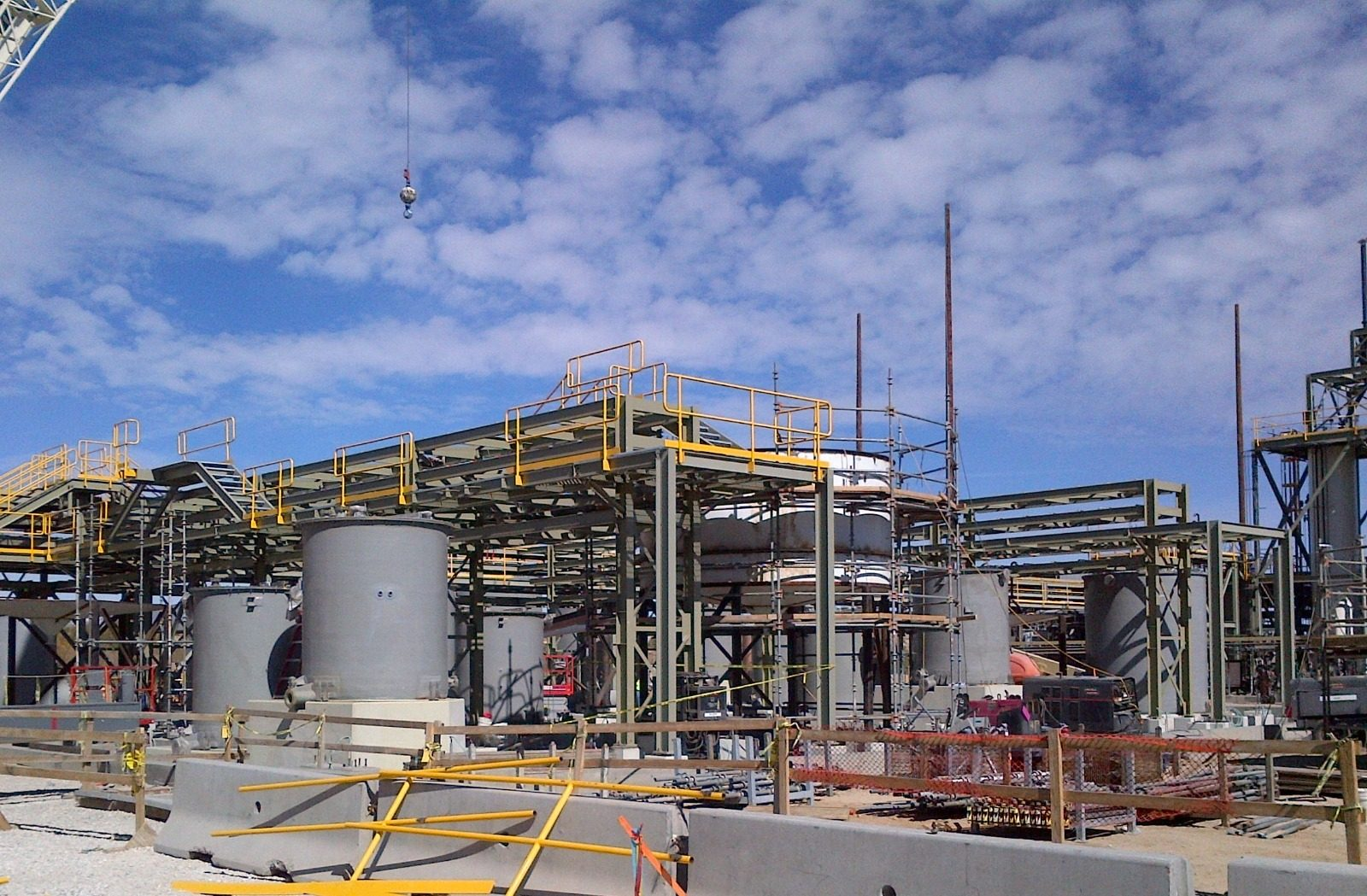
FRP restart tanks
Restart tanks for copper processing duty, supplied complete with nozzles and internals.
06 / Questions
What buyers ask before they order FRP from China.
What is the largest FRP tank you can supply?
15 m diameter. Where a vessel is too large to ship, we field-wind and assemble it on your site with our own supervision, which is how most large SX-EW and water treatment tanks are delivered.
Which design and fabrication standards do you work to?
ASTM D3299 for filament-wound vessels, ASTM D4097 for contact-moulded vessels, ASTM C-582 for corrosion-resistant laminates and ASME RTP-1 where the customer requires it. BS 4994 and EN 13121 are available on request. All work is done in ISO 9001 approved facilities.
Which resin should I specify?
It depends on the fluid, its concentration, the operating and excursion temperatures and whether there is abrasion or vacuum. Isophthalic polyester suits mild duty; vinyl ester covers most mineral acid and SX-EW service; novolac vinyl ester is used for hot concentrated acid. Send us the duty conditions and we will specify the full laminate and explain why.
Can our own inspector visit the factory?
Yes, at any stage, and we will tell you which factory to go to. We also coordinate TÜV Rheinland, Bureau Veritas, ABS or Moody when the contract calls for certified third-party inspection.
What documentation comes with the equipment?
A data book for each major item containing material of construction certificates, quality control reports, any third-party inspection reports and as-built drawings. It is handed over at completion, not chased afterwards.
How long does fabrication take?
It depends entirely on size, quantity and the approval cycle. We give a firm fabrication schedule with the quotation and then report progress weekly with photographs, including any change to the original date and the reason for it.
Send the drawing, or just the duty conditions.
If you have a specification, upload it. If you only know the fluid, the temperature and the volume, that is enough for us to start — our engineers will come back with a laminate specification and a firm schedule.