
Home/Industries/Chemical Processing
Chemical Processing Equipment from China
SBCCO-China supplies and inspects corrosion-resistant chemical process equipment — reactors and vessels, scrubbers and absorption towers, storage and mix tanks, PTFE and PFA lined pipe, valves and heat exchangers — in FRP, lined steel, duplex and exotic alloys, selected against your actual liquor rather than a resistance chart.
01 / The circuit
The material decision is the whole job. Everything else is fabrication.
In chemical service the difference between a ten-year vessel and a two-year vessel is almost never welding quality. It is whether the liner, resin or alloy was chosen against the real liquor, at the real temperature, with the real excursions — and whether anyone said so out loud before the order was placed.
Raw material and product storage
FRP, lined steel and alloy storage tanks, bunded systems, vents, overflow and level instrumentation connections. FRP Products
Reaction and mixing
Jacketed and half-pipe-coil reactors, agitated vessels, autoclaves and mix tanks — bare, glass-lined, rubber-lined or PTFE lined to suit the duty. Steel Process Equipment
Heat transfer
Shell and tube heat exchangers to TEMA, replacement tube bundles, condensers and acid coolers in stainless, titanium, graphite-compatible and lined constructions. Steel Process Equipment
Separation and filtration
Columns, packed towers, distributors, support grilles, demisters, filter housings and filter presses. Solid / Liquid Separation
Scrubbing and emission control
FRP scrubbers, absorption and stripping towers, venturi systems, ducting and dampers for corrosive vapour. Valves & Dampers
Transfer and pipework
PTFE, PFA, FEP and PVDF lined pipe and fittings, lined valves, hose and expansion joints, plus FRP and alloy pipework. PTFE Lined Products
Ultra-pure and electronic chemicals
PPB and PPT grade PTFE and PFA lined pipe and vessels produced in a dust-free workshop for semiconductor and electronic chemical service. PTFE Lined Products
02 / Failure modes
Six ways corrosion-resistant equipment stops being corrosion-resistant.
Each of these is a decision, not an accident. All six are made before fabrication and none of them can be inspected out of the equipment afterwards.
| What fails | Why it happens | What we do about it |
|---|---|---|
| The liner was right for the acid but not the temperature | Resistance charts are read at ambient. Corrosion rate roughly doubles to quadruples for every 10 °C rise. | Liner and resin selected against concentration and temperature together, with the stated service limit written into the quotation. Where the duty is at the edge of the material, we say so rather than quote it quietly. |
| A lined line collapses under vacuum | Conventional lined pipe has poor negative-pressure resistance, and nobody asked whether the line sees vacuum. | Vacuum duty asked for at enquiry. Liner thickness increased for vacuum service, housing vent holes drilled and verified, and vacuum-resistance bellows used where movement is involved. |
| Sprayed coating peels off a reactor | A sprayed PFA, ETFE or ECTFE vessel dry-heated in the jacket, or thermally shocked beyond what the coating tolerates. | Coating process matched to the temperature and vacuum duty, with the jacket operating limits stated: sprayed PFA to 180 °C with a steam or oil-filled jacket, sprayed F40 and F30 to 120 °C. |
| A tube bundle is replaced and no longer fits | The original drawing is lost and the replacement was made from a nominal TEMA layout rather than the machine. | We measure the removed bundle, issue a dimensional report for approval, and manufacture to the approved geometry — tubesheet layout, baffle spacing, tube gauge and material all confirmed in writing first. |
| A pinhole in a liner is found on site | Spark testing done on a sample rather than on every item, or at the wrong voltage for the liner thickness. | 100 % spark test at the voltage specified for that liner thickness, with the result recorded against the item number. A pinhole found in China costs nothing; found on site it costs a shutdown. |
| Documentation cannot support the code claim | Material certificates, weld maps and NDT collected after the fact rather than as the work proceeded. | ITP agreed before the price is confirmed, weld map tied to WPS and to a named qualified welder, film retained, and the data book bound before shipment. |
Send the fluid, the concentration, the temperature range and whether the line or vessel sees vacuum. Those four answers settle most of this table, and we would rather ask for them while the enquiry is open.
03 / Delivered
Built for hot acid and corrosive service.
Chemical work is often confidential, so what we can show is the equipment rather than the plant name. These three are typical of what leaves our shops for acid and corrosive duty.
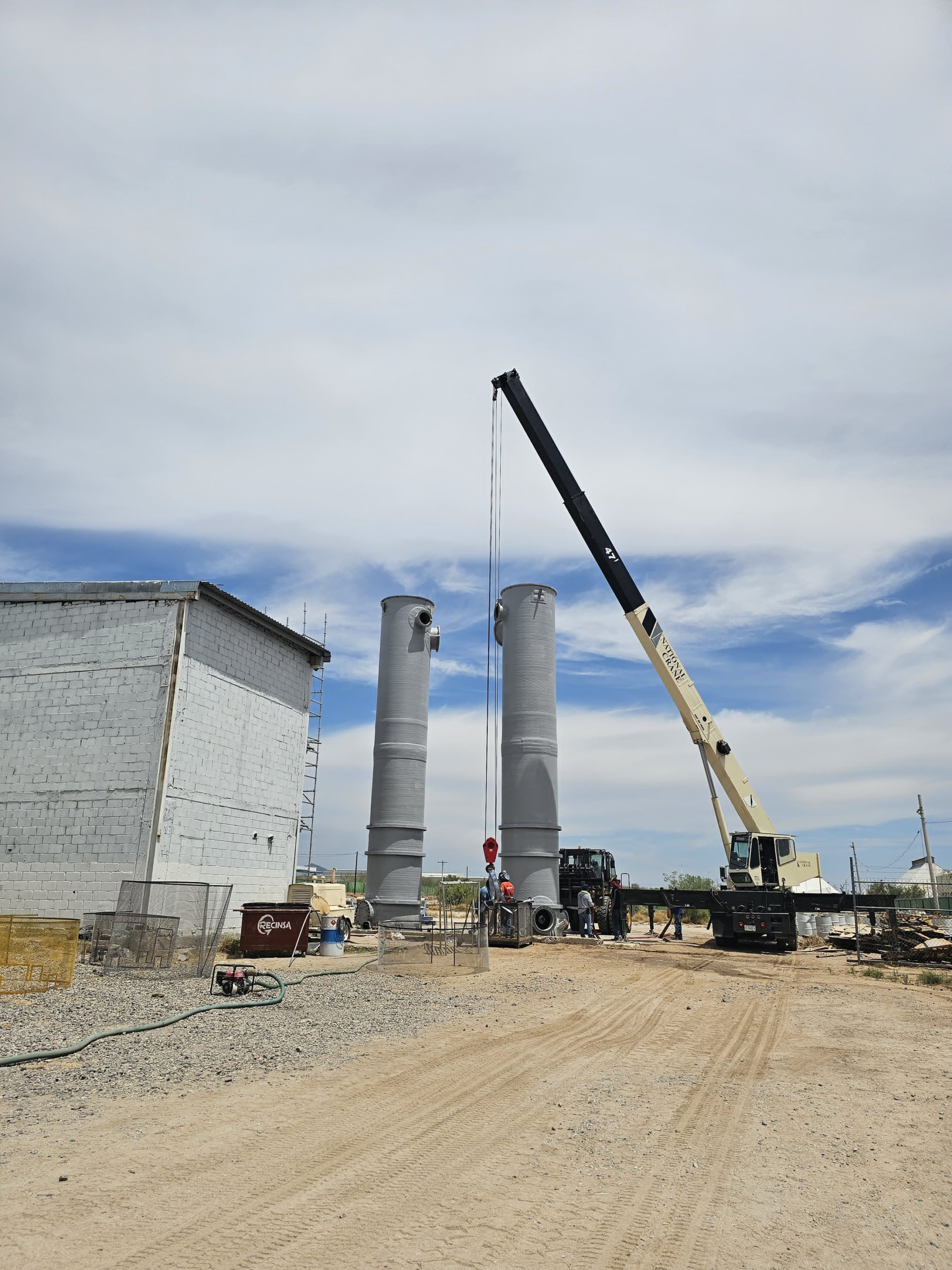
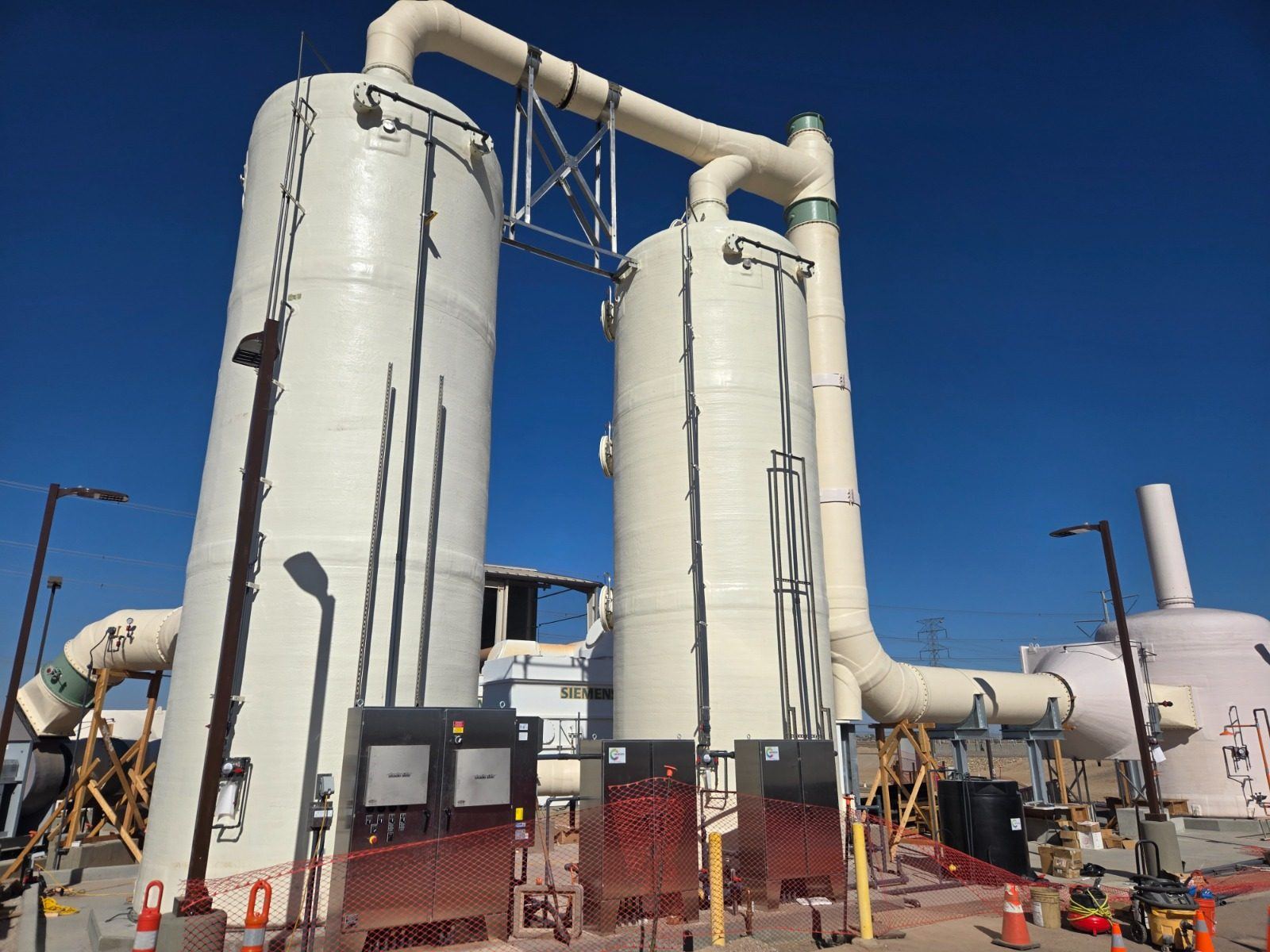
Hot acid service
FRP hot acid overflow tanks
Overflow tanks for hot sulphuric acid, laminated to a schedule agreed against concentration and temperature before layup began.
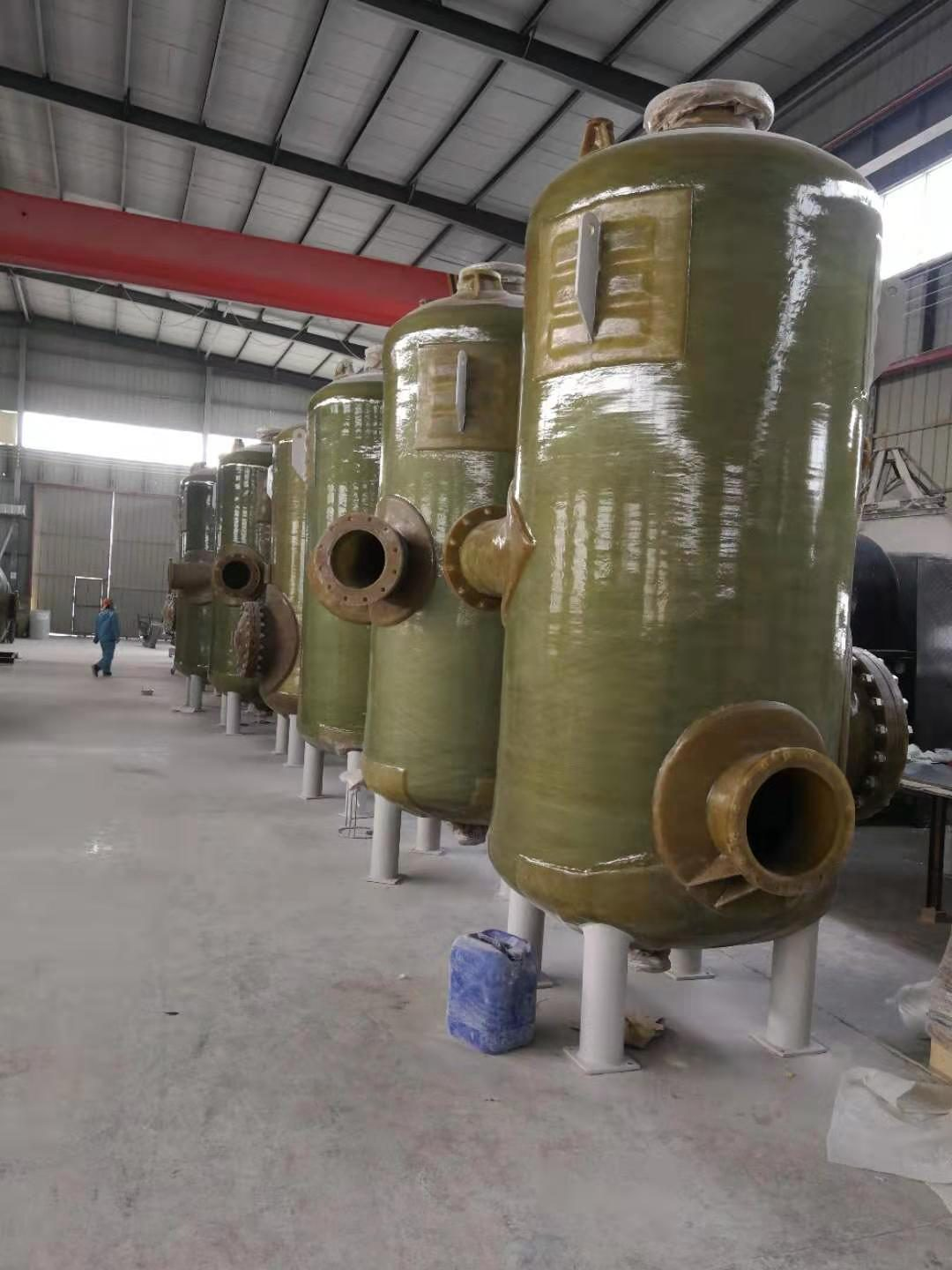
Morocco
Hot acid vacuum receivers
Vacuum receivers for hot acid service, designed for negative pressure and inspected before shipment.
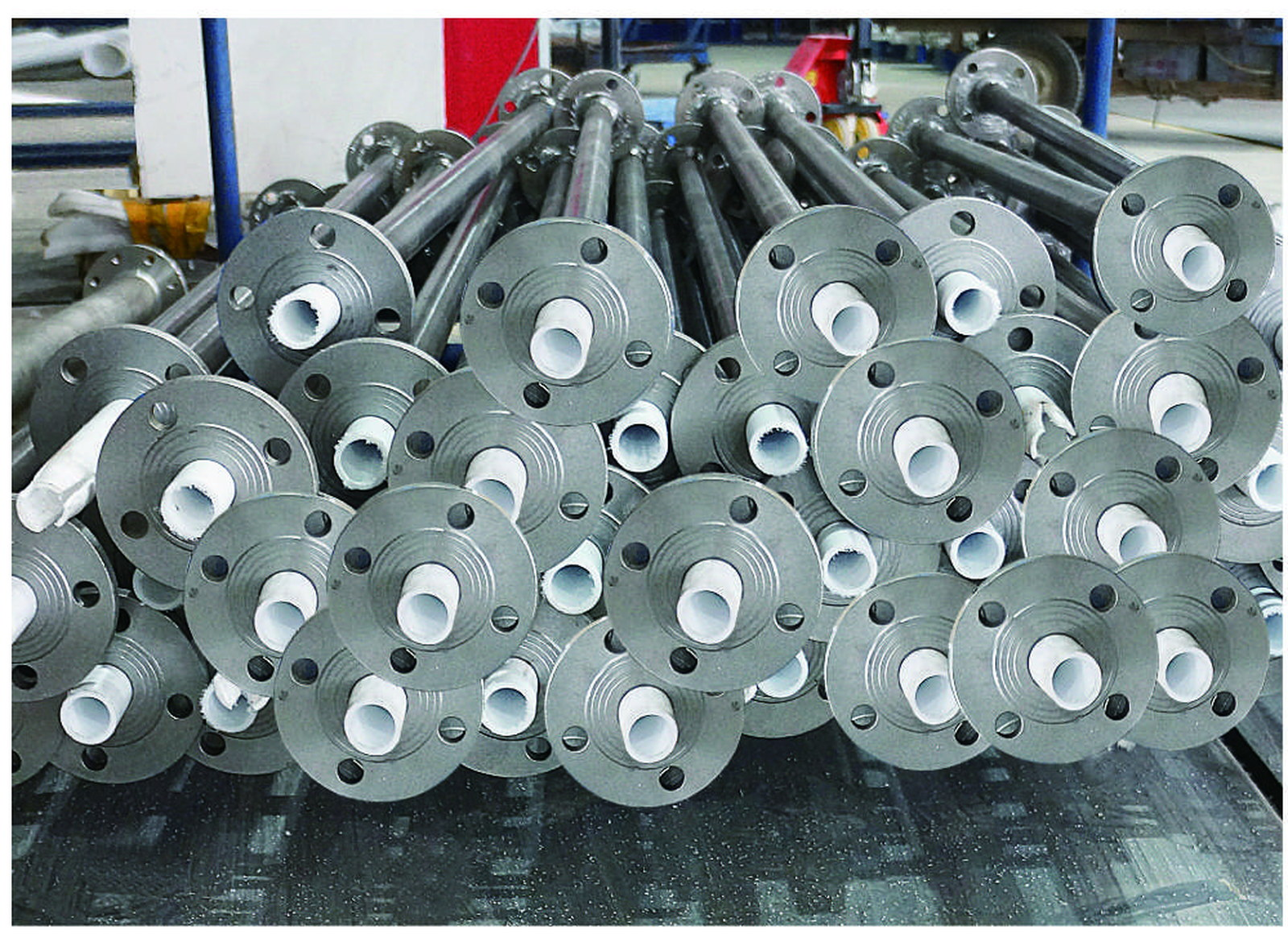
Lined pipework
PTFE lined pipe spools
Steel-lined PTFE spools with the liner flared over both flange faces, spark-tested piece by piece before crating.
04 / What to send us
Send the fluid, the concentration and the temperature.
Not the drawing first. On chemical equipment the drawing tells us the price; the liquor tells us whether the equipment is fit to build at all.
- Fluid, concentration and any trace contaminants that matter
- Operating and design temperature, and the maximum excursion
- Whether the item sees vacuum, and to what level
- Pressure, and the code you need it built to
- Cleanliness requirements — ordinary, electronic grade, PPB or PPT
- Existing equipment details if you are replacing or re-lining
- Cyclic duty: how often it heats, cools or changes service
- Inspection and test plan, and who witnesses it
- Documentation required in the data book, and in which language
- Whether you want us to name and introduce the fabricator
05 / Questions
Chemical processing — common questions
How do I choose between FRP, lined steel and solid alloy?
By liquor, temperature, pressure and how the plant is maintained. FRP wins on corrosion margin and weight; lined steel wins where pressure or vacuum rules; solid alloy wins where mechanical duty or cleanliness dominates. Send the conditions and we will set out the trade-off in writing — including when the cheapest option we could sell you is the wrong one.
Can you re-line equipment we already own?
Yes. Sheet bonding works anywhere a person can get inside the vessel, and we also re-line by sheet lining, winding or spray depending on temperature and cleanliness. We inspect the shell after the old liner is removed, report the condition with photographs, and quote any repair separately rather than lining over a compromised substrate.
Can you supply ASME U-stamped vessels?
Yes, through shops holding a current ASME U certificate. We name the shop and its certificate number in the quotation so you can verify it with the National Board. EN 13445 / PED and GB 150 routes are also available.
Do you handle ultra-pure and electronic-grade work?
Yes — PPB and PPT grade PTFE and PFA lining produced in a dust-free workshop with dedicated ultrapure-water and high-purity-nitrogen lines, for electronic chemicals, chip, liquid-crystal and photovoltaic plants.
Who does the third-party inspection?
You choose. We engage SGS, BV, TÜV, Intertek, ABS or Lloyd’s on your behalf, or host your own inspector. Where we appoint the agency we disclose any commercial relationship with the fabricator in writing before the assignment begins.
What lead times should we plan for?
Lined pipe and fittings 10–16 weeks; FRP vessels and scrubbers 12–22 weeks; lined reactors and pressure vessels 16–24 weeks. We quote fabrication, inspection and sailing as separate legs so you can see where the time goes.
Send the liquor, the temperature and the pressure.
Upload a P&ID extract, a mechanical data sheet or a photograph of what is failing. We come back with a material recommendation, its stated limits, the code route, an inspection plan and a price.