
Home/Products/Castings & Forgings
Castings & Forgings
SBCCO-China supplies steel, iron and alloy castings and open-die forgings from 5 kg to 40 tonnes — mill heads, girth gears, pinions, slag pots, pump casings and structural components. Cast to ASTM, EN or GB chemistry, heat-treated to recorded curves, machined, NDT-inspected and documented in China before shipment.
01 / What we supply
What we cast, forge and machine
We do not own a foundry. We qualify them, place the work, stand in them while it is poured, and sign nothing off until the paperwork matches the part.
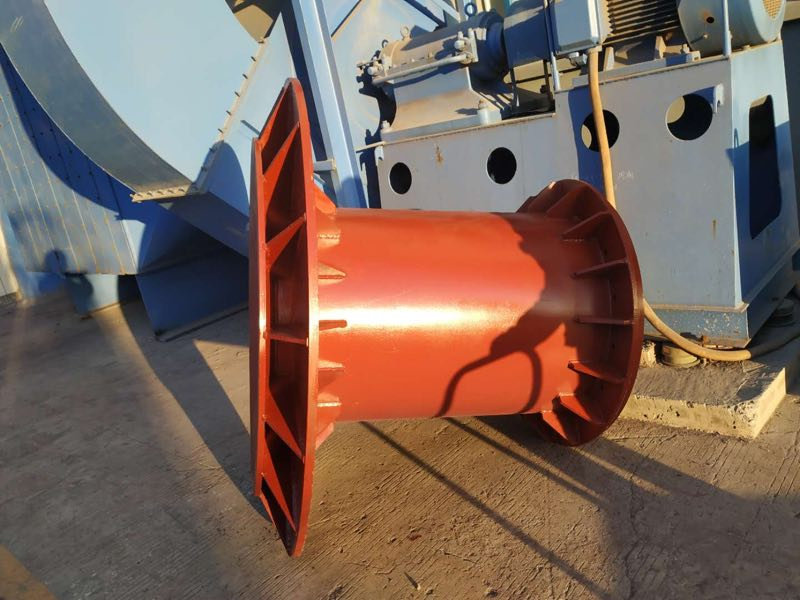
Mill Heads — as cast
Cast steel and ductile iron mill heads and trunnion heads to 25 t. Riser and gating simulated before pour; UT and MPI on the flange and the trunnion radius.
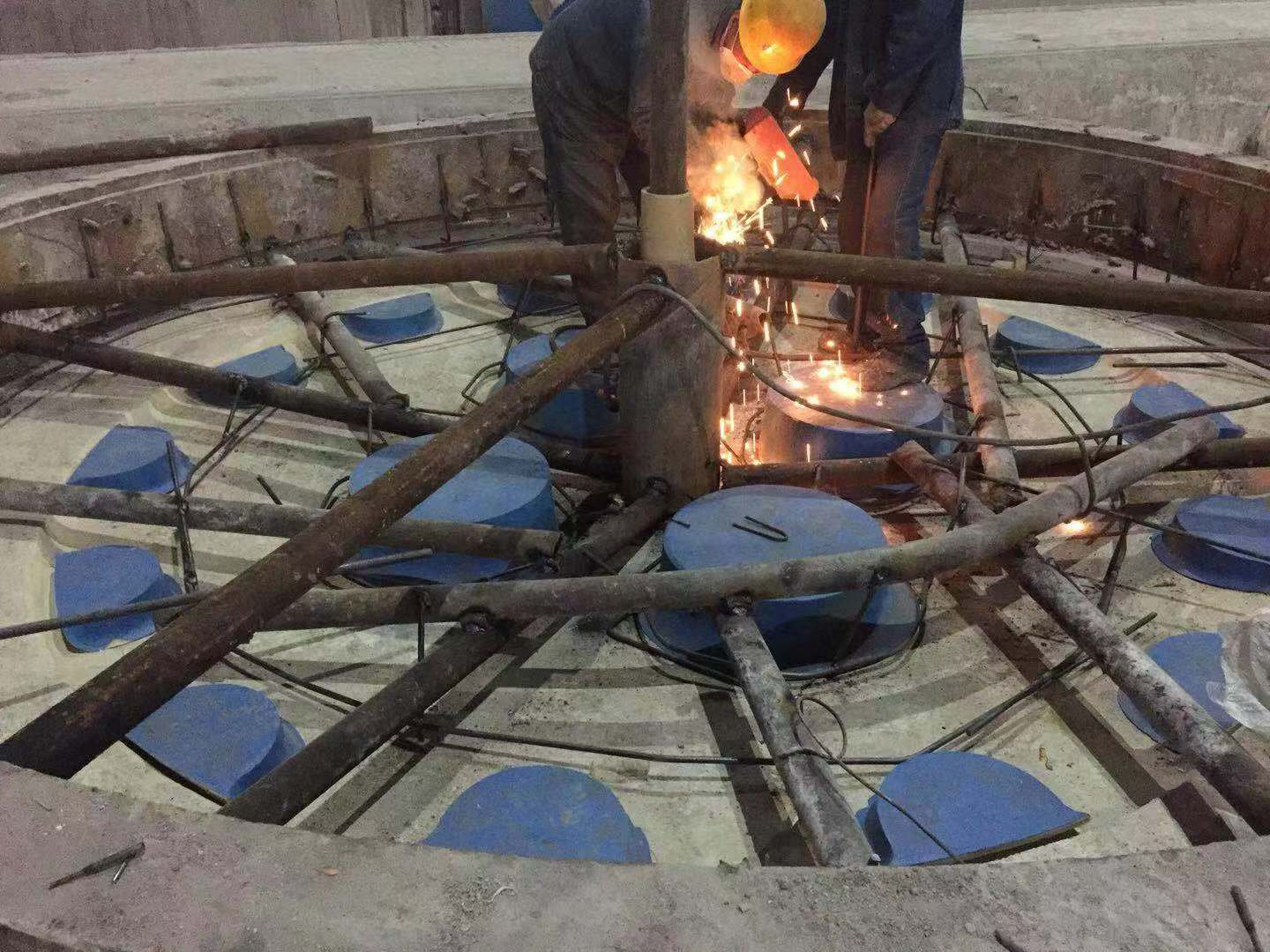
Mill Heads — machined
Bolt circles, trunnion bores and mating faces machined on vertical boring mills to ISO 2768-f or drawing tolerance, with a dimensional report issued before crating.
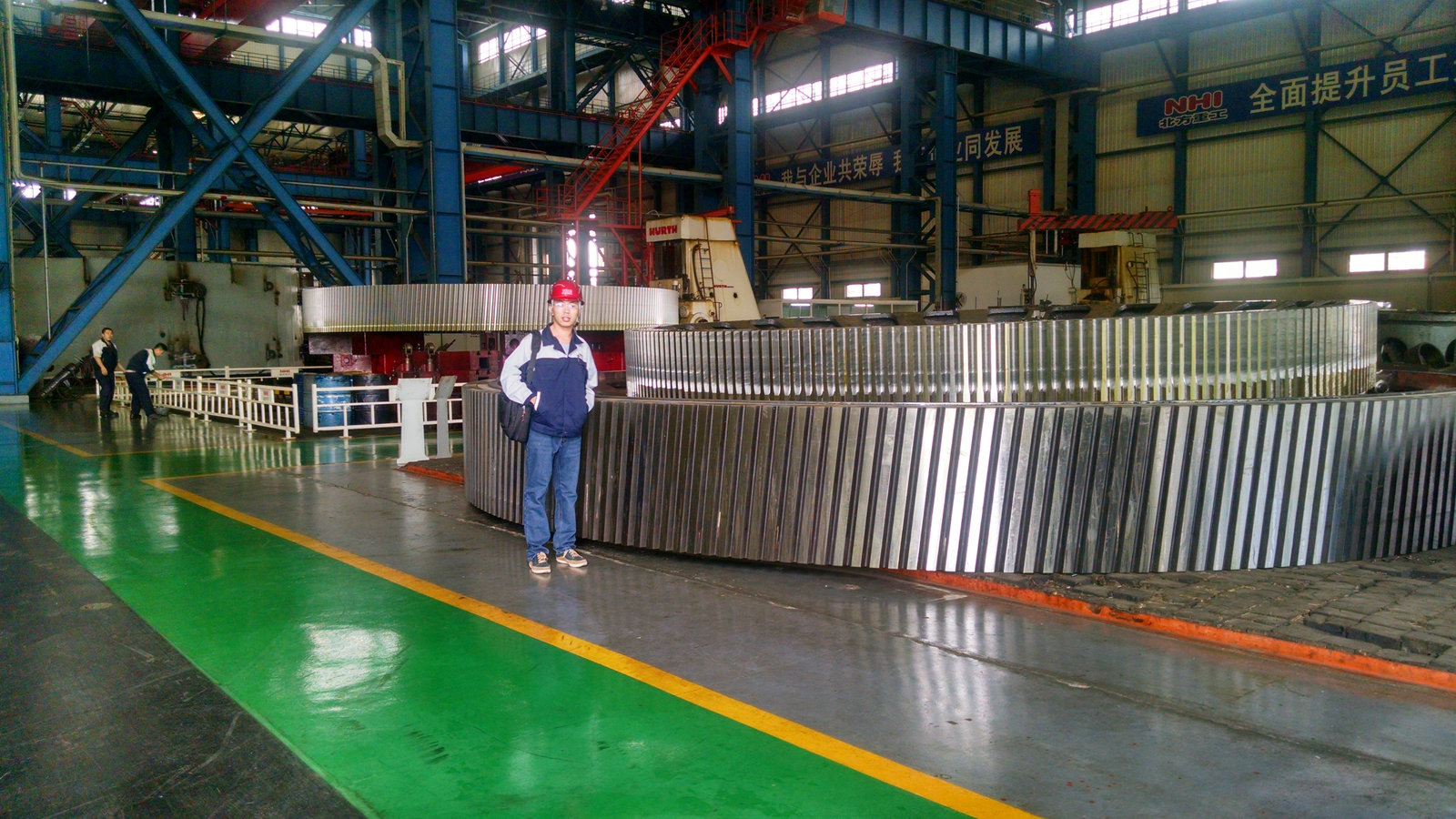
Girth Gears
Split and single-piece girth gears to 9 m diameter — cast or fabricated blank, hobbed and finished to AGMA 10 / DIN 8, with the tooth contact pattern recorded and photographed.
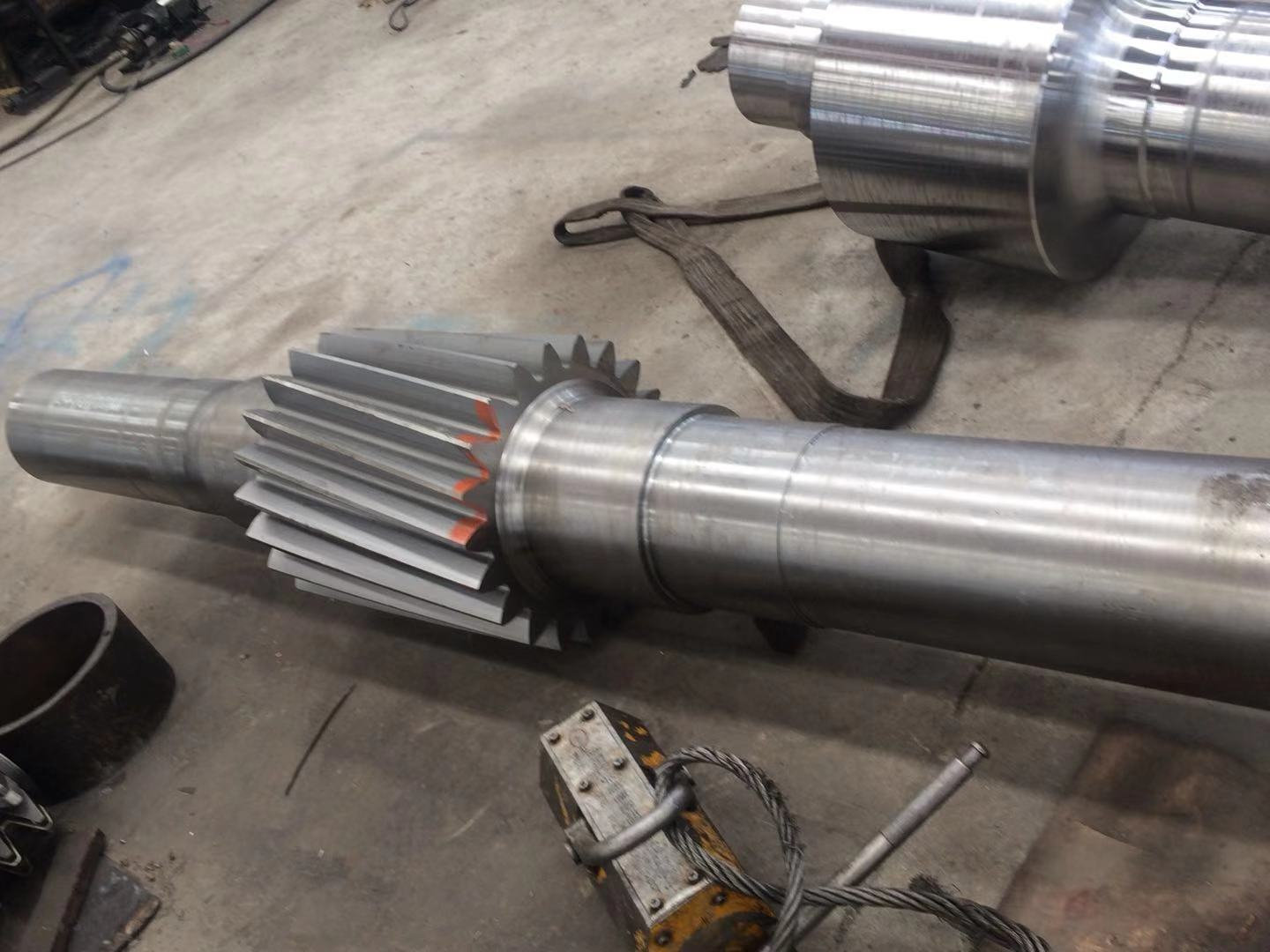
Pinions & Drive Shafts
Forged alloy steel pinions and shafts, through-hardened or case-carburised, journals ground, tooth flanks magnetic-particle inspected.
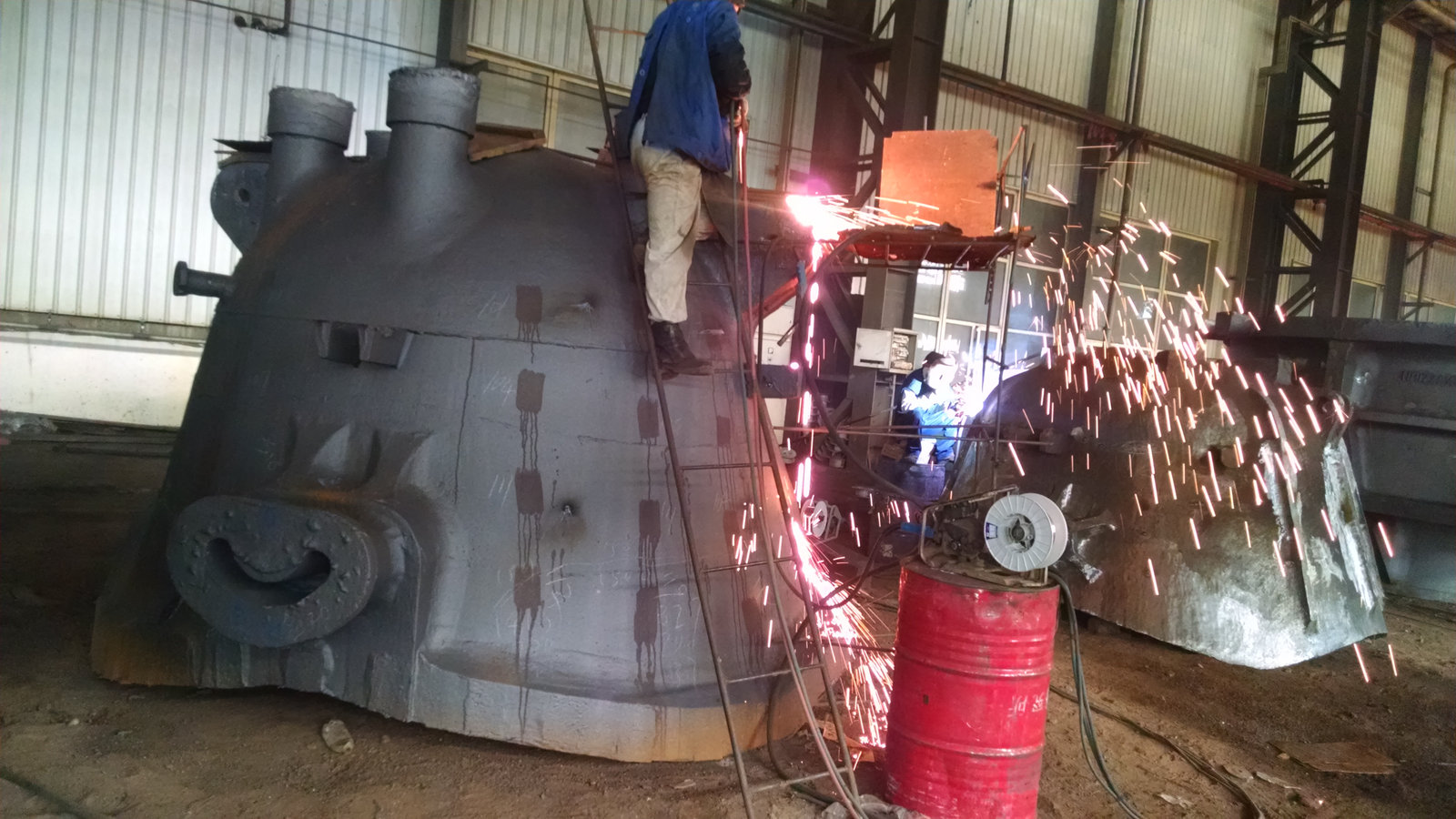
Slag Pots & Ladles
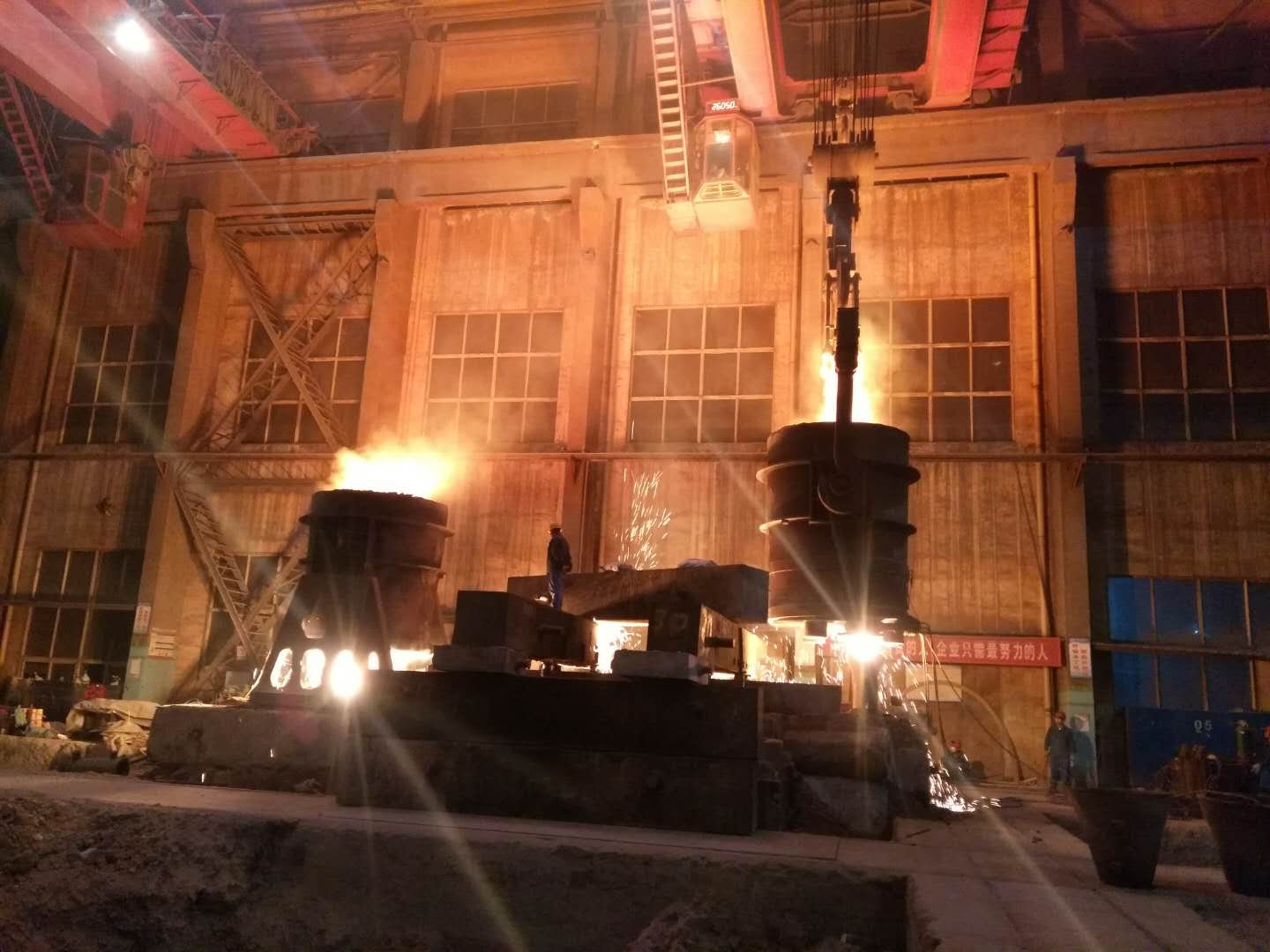
Slag pots, hot-metal ladles and transfer vessels to 40 t in ZG230-450 / A216 WCB or heat-resistant grades, with integrally cast lifting trunnions, load-tested before dispatch.
Melting & Heat Treatment
Electric arc and induction melting, spectrometer chemistry per heat, and normalising, quench-and-temper or solution-treatment cycles recorded on chart and issued with the casting.
02 / Specification
What we can build, in numbers.
If your duty falls outside this envelope, say so in the enquiry — we will tell you honestly whether it is something our shops should be building.
| Single-piece weight | 5 kg to 40,000 kg as cast; to 25,000 kg finish-machined |
|---|---|
| Cast materials | Carbon and low-alloy steel (A216 WCB, A217, A148), stainless (CF8M, CF3M, 2205), ductile iron (60-40-18 to 100-70-03), grey iron, Mn steel (A128 A / B2 / B4), high-chrome iron (A532) |
| Forged materials | 42CrMo4 / 4140, 34CrNiMo6, 20MnMo, 16Mn, 304 / 316; seamless rolled rings to 4,000 mm OD |
| Standards | ASTM, ASME SA, EN 10213 / EN 10293, DIN, GB/T, JIS — named on the enquiry, certified on the MTR |
| Heat treatment | Normalise, anneal, quench & temper, solution treat — furnace chart recorded and issued per batch |
| NDT available | MPI (ASTM E709), liquid penetrant, ultrasonic (ASTM A609), radiography, PMI, hardness mapping |
| Gear capability | Hobbing to 9,000 mm OD, module 30, AGMA 10 / DIN 8; tooth contact and backlash recorded |
| Machining | Vertical boring to 8 m, horizontal boring, CNC turning to 4 m, gantry milling |
| Documentation | MTR per heat, heat-treatment chart, NDT reports, repair map, dimensional report and photographic record — bound into one data book |
03 / How we control it
A casting certificate is easy to produce. A casting is not.
The failure mode in Chinese castings is almost never the pour itself. It is the paperwork drifting away from the part — a substituted heat, a skipped normalising cycle, a repair weld nobody recorded. Our entire method is built around closing that gap.
Heat traceability is physically stamped
The heat number is stamped into the casting, not written on a tag that falls off in transit. The MTR, the spectrometer print-out and the furnace chart all carry the same number — and we photograph the stamp on the part itself.
Repair welds are declared, or the part is rejected
Every foundry repairs castings. The only question is whether they tell you. We require a repair map for each piece — location, depth, procedure, welder qualification, post-weld heat treatment — and we photograph the excavation before it is filled.
Heat treatment is watched, not reported
A furnace chart can be reprinted from last month. Our inspector records the charge going in, photographs the chart at temperature with the date visible, and confirms the load matches the parts on the packing list.
Dimensions are proven before crating
Machined surfaces are measured against the drawing and the dimensional report is issued for your approval. Nothing ships on a verbal confirmation.
04 / Questions
Castings & forgings — common questions
What is the largest casting you can supply?
Single pieces to 40 tonnes as cast and 25 tonnes finish-machined, with gear hobbing to 9 m outside diameter. Above that we split the design into bolted segments and machine the joint faces as a matched set.
Which foundry will make my part?
We will tell you. Once the enquiry is priced we name the foundry, its accreditations and comparable work it has done. You are welcome to visit it with us, and to appoint your own inspector at any stage.
Can you work to ASME or PED requirements?
Yes, where the works holds the relevant approval. Tell us the code, the class and whether third-party involvement is required and we will confirm in writing before quoting rather than after.
What happens when a casting fails inspection?
It does not ship. We have had castings fail — nobody who has been doing this since 1988 has a perfect record. What we commit to is finding it before you do, telling you the same week, and correcting it at our own cost.
Do you supply the pattern, or do I?
Either. A pattern we cut is quoted separately and stored at the foundry under your name for repeat orders. A pattern you supply is inspected on arrival and its condition reported before use.
Send the drawing. We will name the foundry.
Upload a casting or forging drawing, or a photograph of the part you need replaced, and we will come back with material options, an inspection and test plan, a lead time and a price.