
Home/Products/PTFE Lined Products
PTFE & Fluoropolymer Lined Products
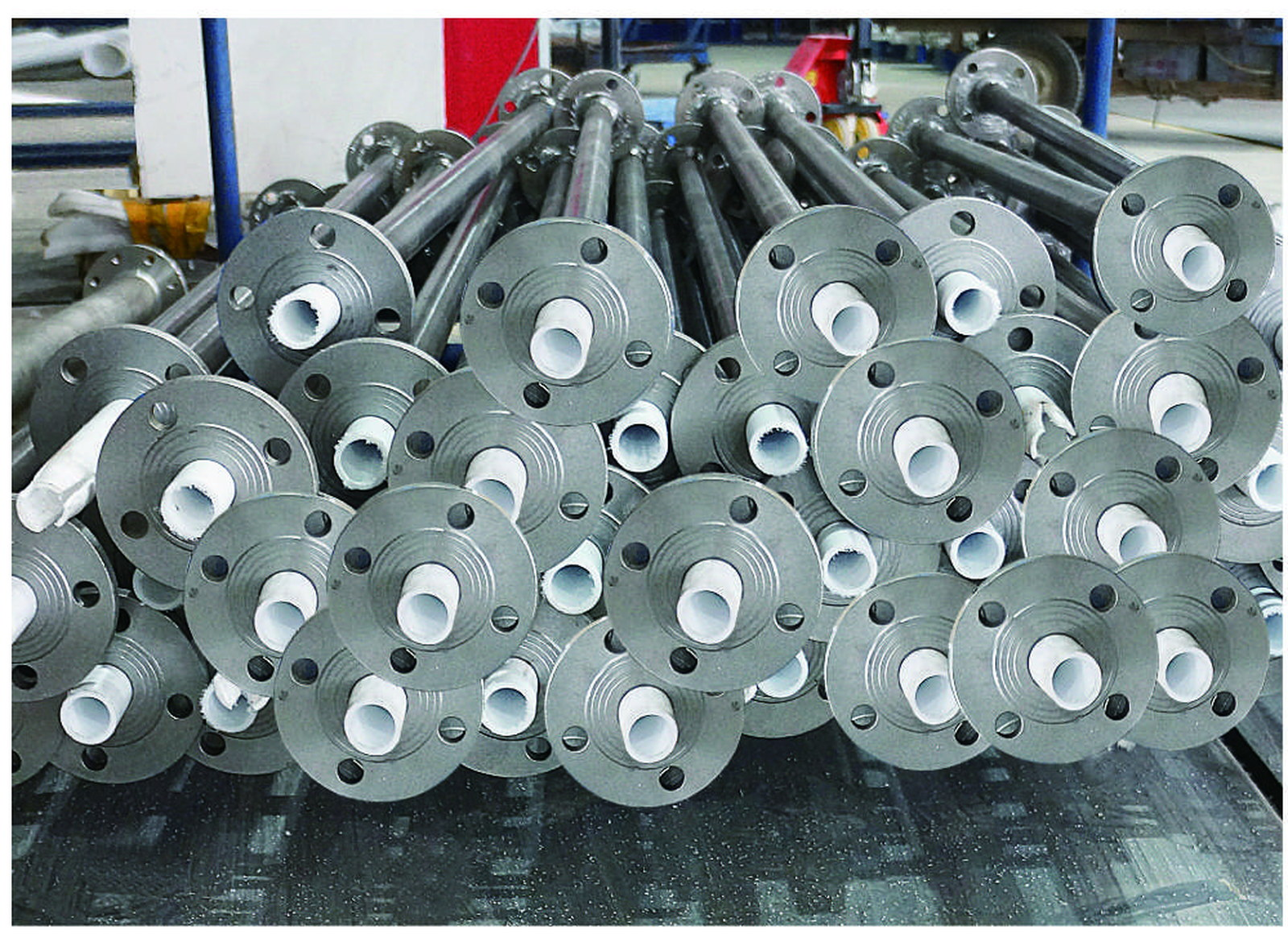
SBCCO-China supplies PTFE, PFA, FEP and PVDF lined steel pipe, fittings, hose, bellows, vessels, columns and tower internals from DN15 to DN600 — isostatically moulded, sheet-lined, wound or spray-coated to suit the duty, built to ASTM F1545 and HG/T 4584, and spark-tested piece by piece before shipment.
01 / What we supply
What we supply
Fluoropolymer lining is a chemical-resistance system, not a coating. Every item here is a steel pressure boundary with an engineered plastic liner inside it — and the two have to be bought, inspected and documented as one thing.
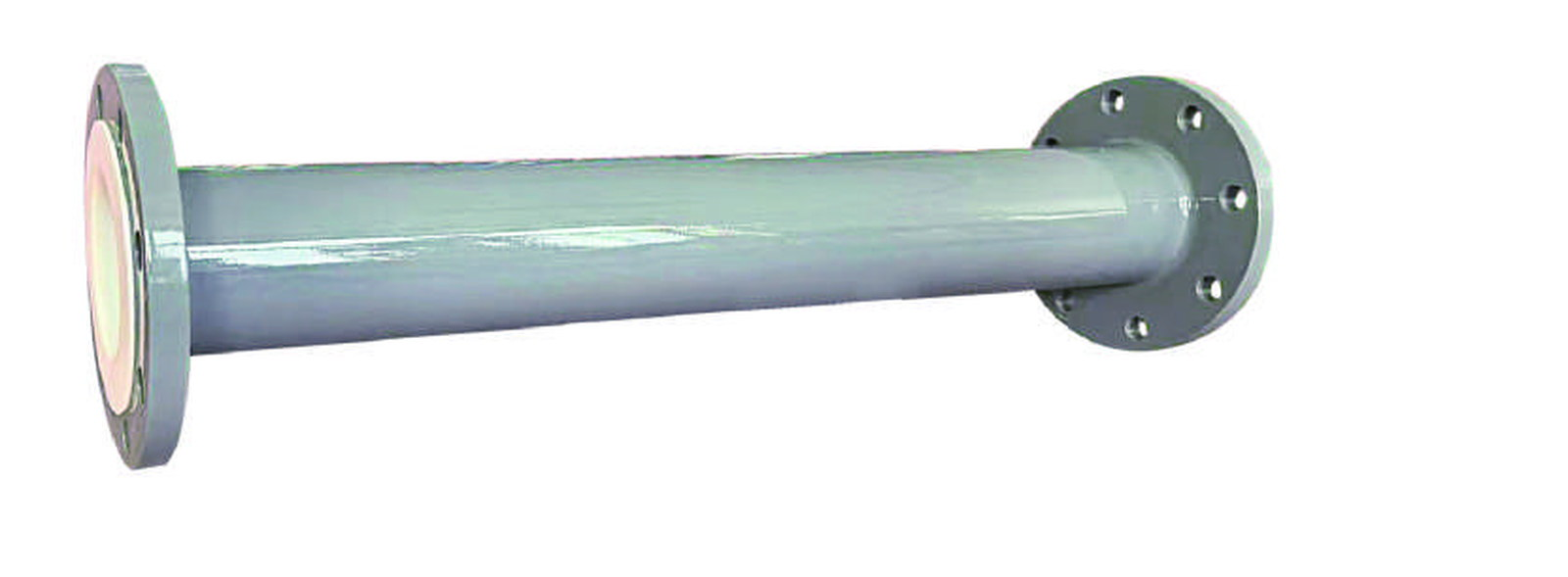
Lined Pipe & Spools
Seamless steel housing with a PTFE liner flared over both flange faces. DN15 to DN600, −20 °C to +180 °C, −0.09 to 1.6 MPa, with ASME B16.5 Class 150/300 flanges or HG, GB, JB, JIS, BS and DIN drilling.
Lined Fittings
90° elbows, tees, crosses, reducers, instrument tees, cross sight glasses, clamp-type adjustment pads and blind flanges — dimensioned to match the straight pipe, so a whole line comes from one source and one data book.
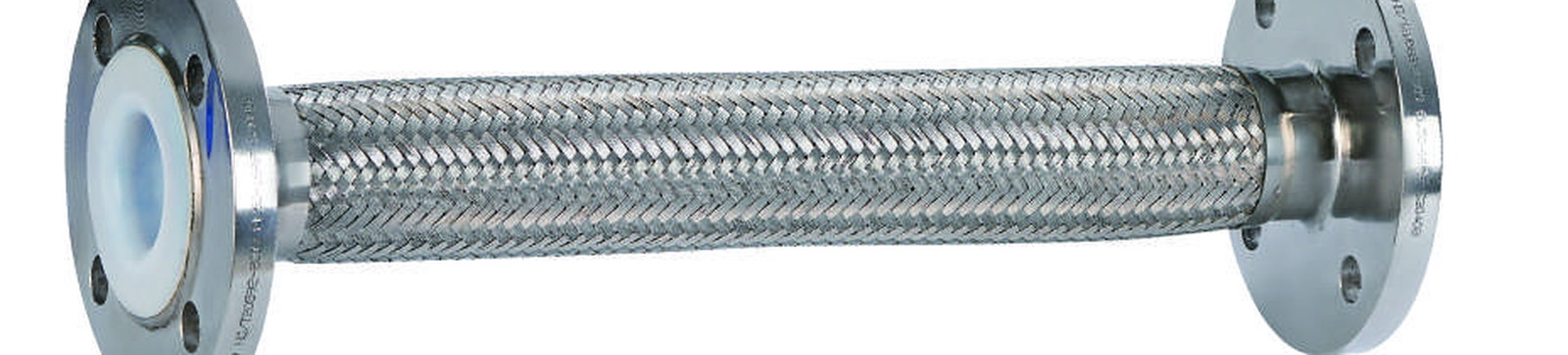
Lined Hose & Expansion Joints
Convoluted PTFE hose with stainless braid in DN15 to DN300, PTFE bellows to DN1600 rated at 5,000 cycles or more, braided and steel-shielded bellows rated at 10,000, and vacuum-resistant bellows to DN1000.
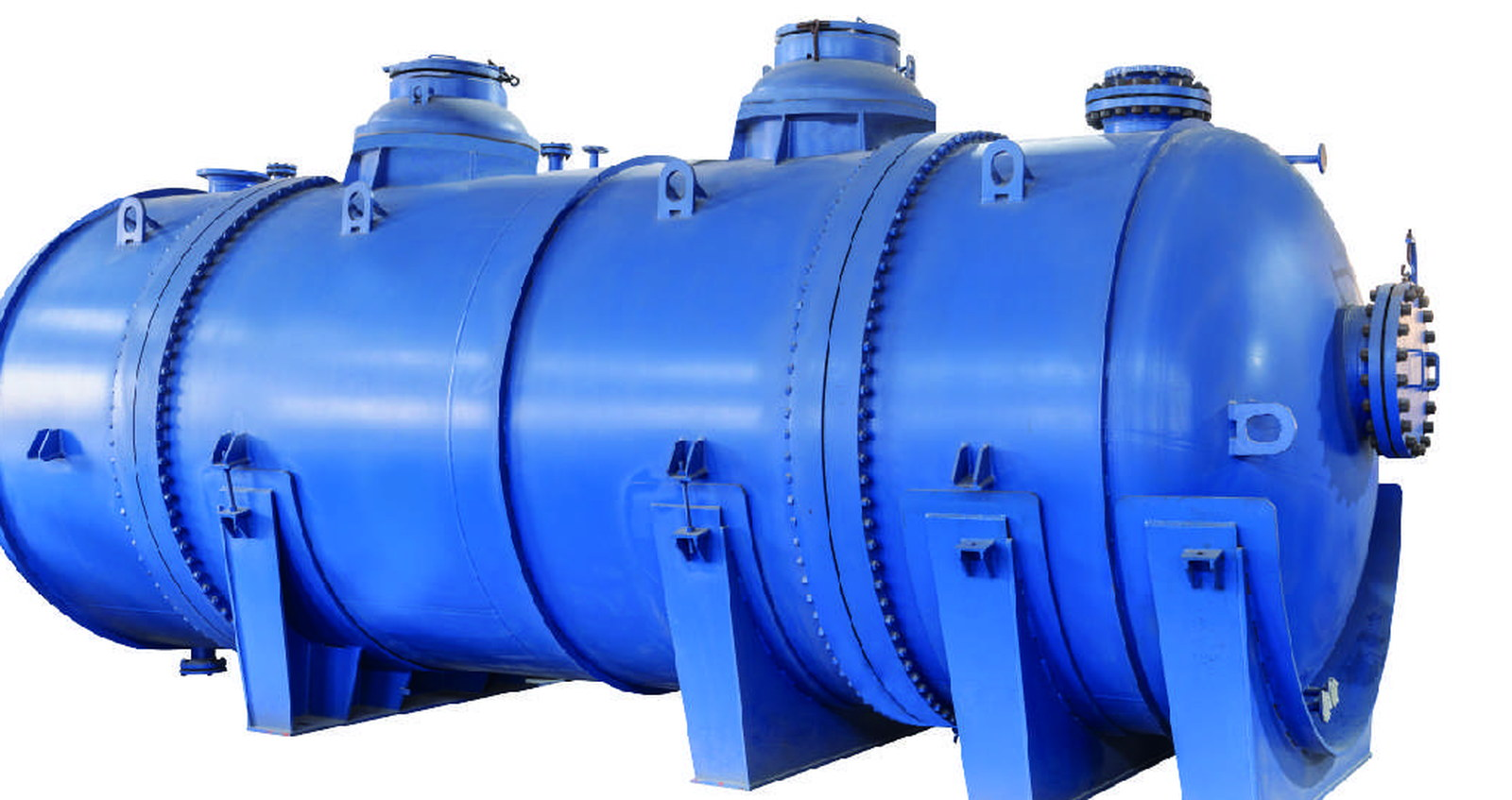
Lined Vessels & Reactors
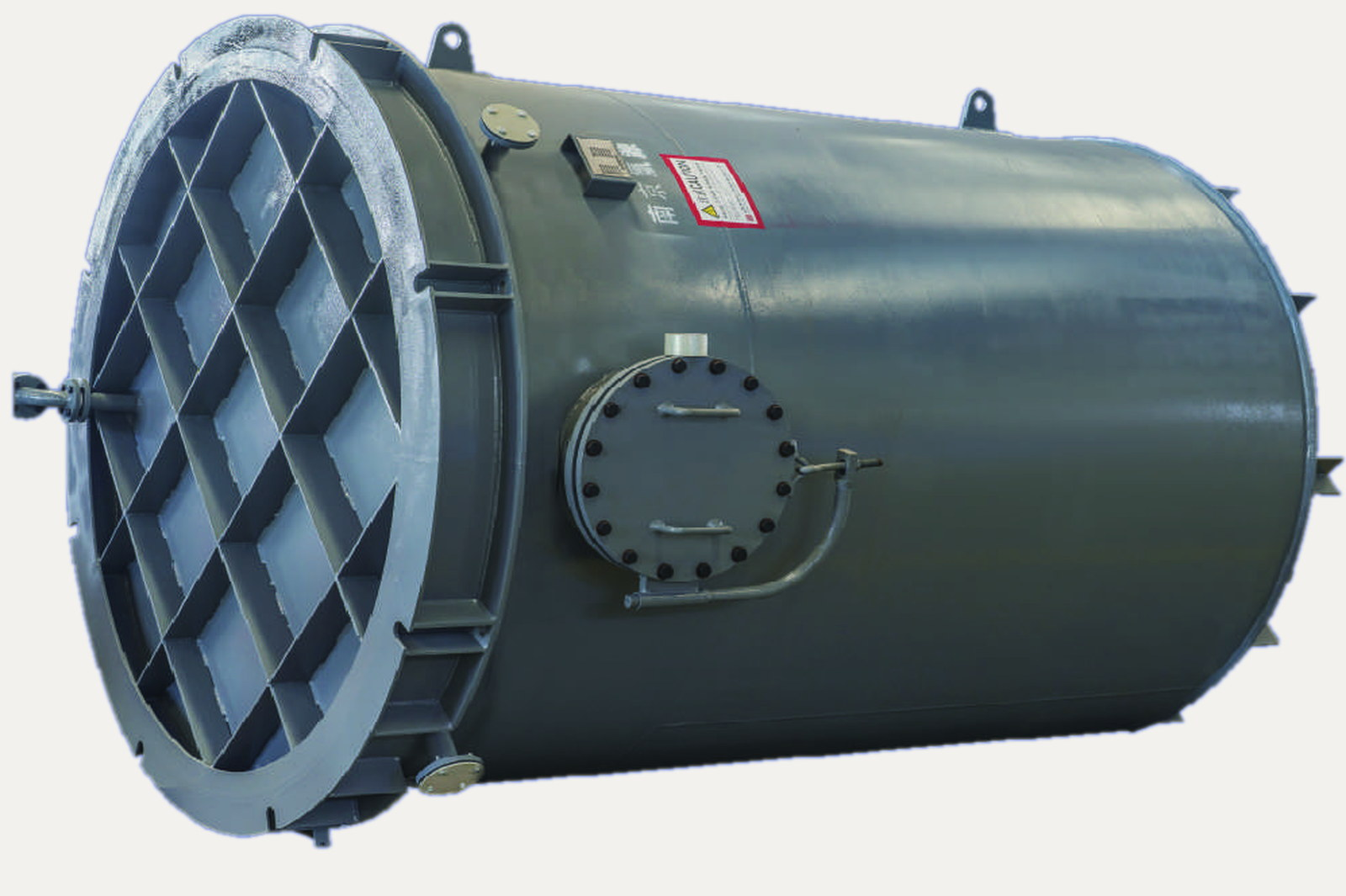
Reactors, receivers, autoclaves and storage tanks lined by sheet lining, sheet bonding, wire-mesh winding or fluoropolymer spray — with lined nozzles, manways, dip pipes and thermowells supplied as a matched set.
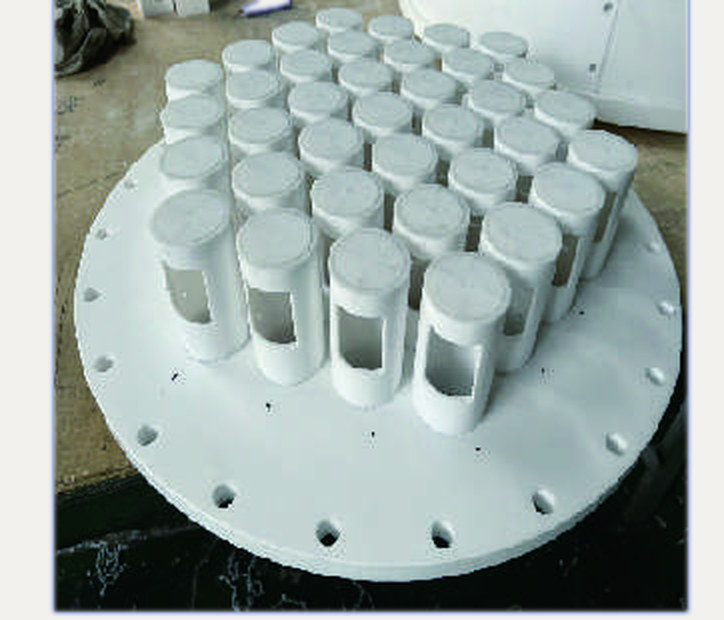
Lined Columns & Tower Internals
Columns and scrubbers lined in segments to 180 °C, plus solid PTFE tower liquid distributors, reaction-kettle gas distributors, packing support grilles and demisters moulded to the tower diameter.
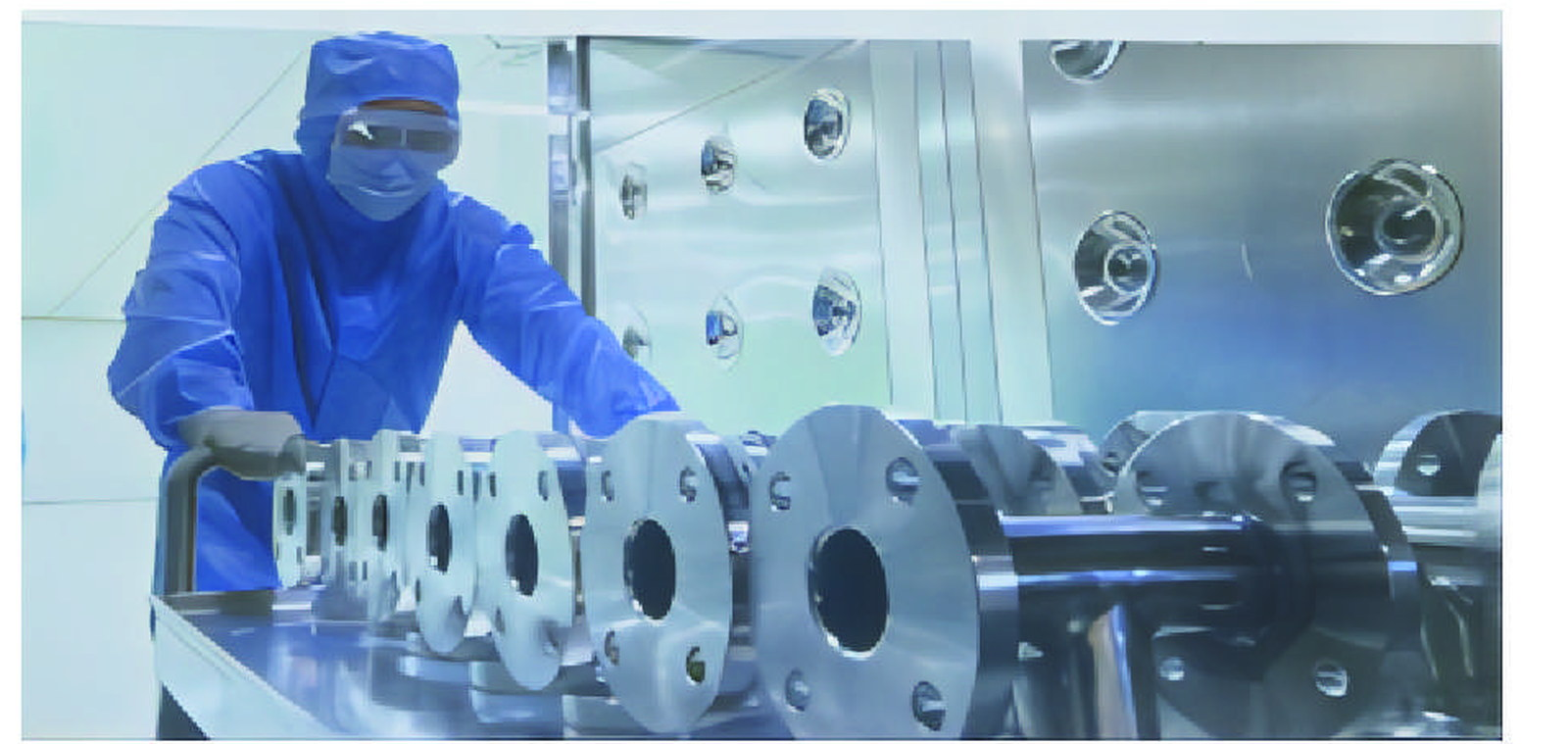
Ultra-Pure & Semiconductor Grade
PPB- and PPT-grade PTFE and PFA lining produced in a dust-free workshop with dedicated ultrapure-water and high-purity-nitrogen lines, for electronic chemicals, chip, liquid-crystal and photovoltaic plants.
02 / Specification
What we can build, in numbers.
If your duty falls outside this envelope, say so in the enquiry — we will tell you honestly whether it is something our shops should be building.
| Liner materials | PTFE (F4), PFA, FEP (F46), PVDF (F2), PCTFE (F3), plus PP and PE where the chemistry allows a non-fluorinated liner |
|---|---|
| Housing materials | Seamless carbon steel, 304 and 316L, ductile iron. Flanges to ASME B16.5 Class 150/300, or HG, GB, JB, JIS, BS, DIN and ANSI drilling |
| Size range | Lined pipe and fittings DN15–DN600 (NPS ½–24); chlorine pipe DN20–DN125; hose DN15–DN300; bellows to DN1600 |
| Standards | ASTM F1545, HG/T 4584-2014 (isostatic process), HG/T 4093-2009 (vacuum test), HG/T 20538 (design), ASME B16.5, ASME B16.10 |
| Operating temperature | −20 °C to +180 °C for lined pipe and wound equipment; 120 °C for sheet-lined and sheet-bonded equipment; 180 °C for sprayed PFA |
| Operating pressure | −0.09 MPa to 1.6 MPa (−0.9 to 16 bar); cross sight glasses to 0.6 MPa — stated per item rather than per catalogue |
| Liner thickness | 2 mm minimum on pipe; typically 3–15 mm depending on diameter and process — measured and recorded, never assumed |
| Straight-length limit | Per HG/T 20538: 4 m below 100 °C · 3 m at 100–150 °C · 2 m at 150–180 °C. Longer runs are built from shorter flanged spools |
| Testing & documentation | 100 % spark (holiday) test, vacuum test to HG/T 4093-2009, hydrostatic test, liner thickness measurement and dimensional report — bound into one data book |
03 / Selection
Two choices decide the price and the service life: the polymer, and the process.
Most enquiries name a polymer and stop there. The lining process matters just as much — it sets the temperature ceiling, it decides whether the equipment can see vacuum, and it decides whether the job can be done on a vessel you already own. Both are named in every quotation we issue.
Liner materials — where each one stops
| Polymer | Code | Continuous heat resistance | Recommended service | Water absorption | Where it fits |
|---|---|---|---|---|---|
| PTFE | F4 | 260 °C | ≤180 °C | 0.001–0.005 % | Widest chemical resistance. The default for lined pipe and fittings. Not melt-processable. |
| PFA | — | 260 °C | ≤200 °C | ≤0.01 % | Melt-processable — seamless moulded fittings and vessel nozzles, best thermal cycling. |
| FEP | F46 | 204 °C | ≤150 °C | ≤0.01 % | Melt-processable, lower cost, lower temperature ceiling. |
| PCTFE | F3 | 120–190 °C | ≤120 °C | ≤0.005 % | Harder, lower permeation, narrower application. |
| PVDF | F2 | 150 °C | ≤100 °C | 0.04 % | Mechanically stronger, much narrower chemical range. |
| PP | PP | 100 °C | ≤85 °C | 0.005 % | Non-fluorinated. Low cost where the chemistry is mild. |
| PE | PE | 100 °C | ≤85 °C | 0.005 % | Non-fluorinated. Low cost where the chemistry is mild. |
Brittle temperature: PTFE −180 to −195 °C · PFA −80 to −195 °C · PVDF −62 °C · PP −20 °C. Corrosion rate roughly doubles to quadruples for every 10 °C rise, so any resistance table is a starting point rather than a guarantee. Send us the actual liquor, the concentration and the operating temperature and we will confirm the liner against them.
Lining processes — and their real limits
| Process | Max service temperature | Vacuum | Where it is used |
|---|---|---|---|
| Isostatic moulding | 180 °C | Per liner thickness | Pipe and fittings. Densest and most uniform wall; meets or exceeds ASTM F1545. Highest cost. |
| Sheet lining (loose) | 120 °C | Positive or slight negative | Segmented towers and storage reactors where liner cleanliness is not critical. |
| Sheet bonding | 120 °C | Positive or slight negative | Not limited by vessel geometry — works anywhere a person can get inside. Used for electronic-grade chemical storage. |
| Wire-mesh winding | 180 °C | Positive or slight negative | Segmented towers and storage reactors that run hotter than sheet lining allows. |
| Spray — PFA | 180 °C | Full vacuum below 150 °C | Weld-free coating, highest temperature. The jacket must carry steam or heat-transfer oil — dry heating peels the coating. |
| Spray — ETFE (F40) | 120 °C | Full vacuum below 80 °C | Weld-free coating; better solvent and ageing resistance than F30. |
| Spray — ECTFE (F30) | 120 °C | Full vacuum below 80 °C | Weld-free coating, harder than F40. |
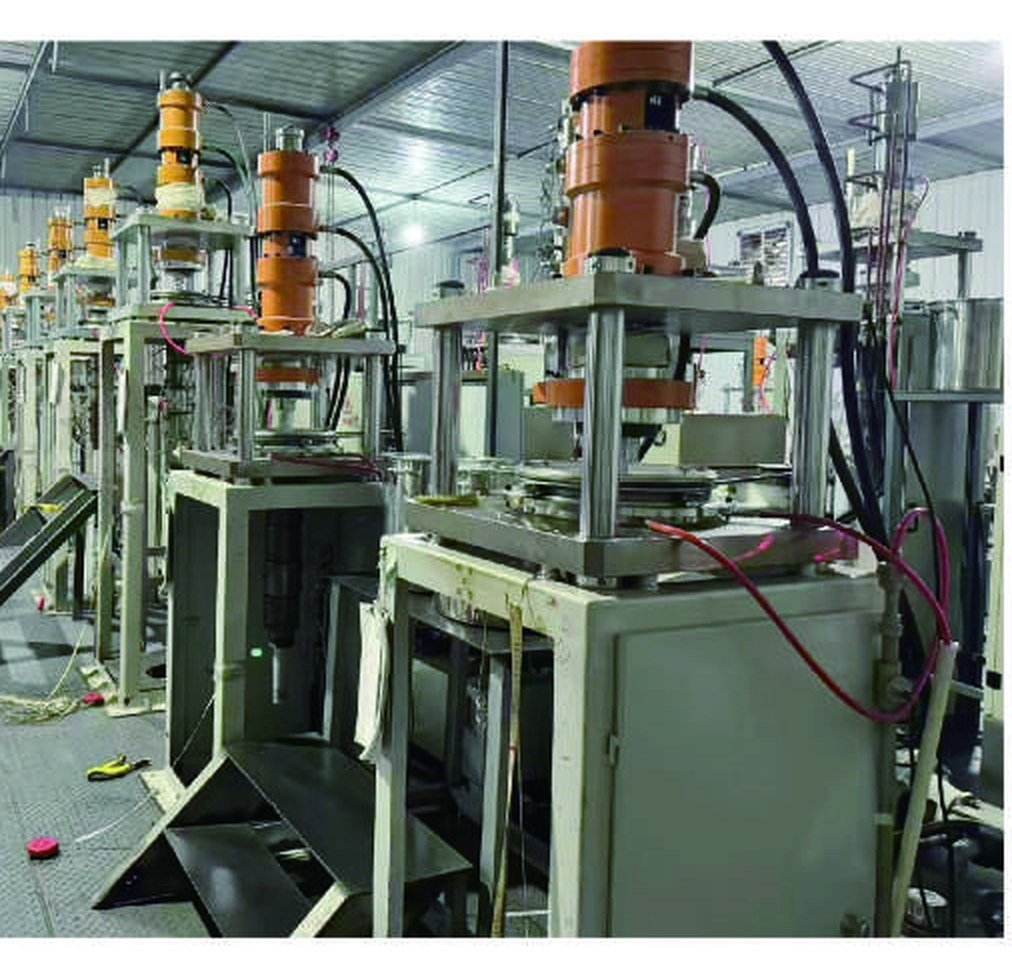
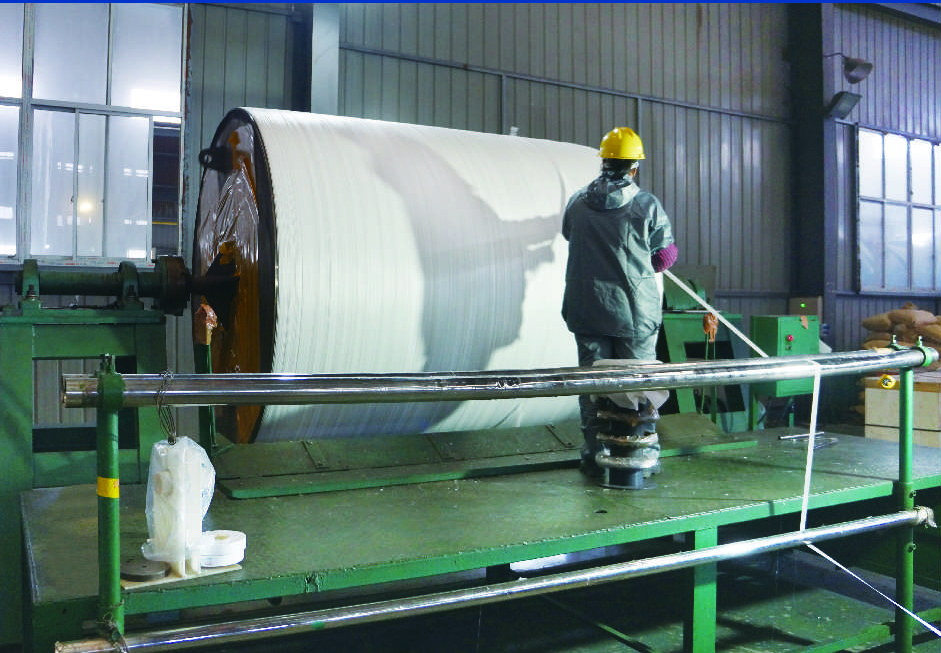
04 / How we control it
A lined pipe that fails does not fail slowly.
Lined equipment is specified precisely where the fluid is dangerous. When a liner fails the consequence is not downtime — it is acid on a walkway. Four things decide whether that happens, and all four are settled in China, before the equipment ships.
The liner is matched to your actual chemistry
PTFE is not the answer to everything. Permeation, thermal cycling, vacuum and temperature all change it — PFA moulds into complex geometry and survives cycling better, FEP costs less but stops around 150 °C, PVDF is mechanically stronger with a far narrower chemical range. Send the fluid, the concentration, the temperature range and whether the line sees vacuum, and we state the liner and its limits in writing before you order.
Length and temperature limits are respected, even when it costs us the order
Steel and PTFE expand at very different rates, so HG/T 20538 caps a lined straight run at 4 m below 100 °C, 3 m to 150 °C and 2 m to 180 °C. A supplier who quotes a single 6 m spool for a 160 °C line either does not know this or is not telling you. We quote the split, explain why, and take the smaller order.
Every item is spark tested, at the correct voltage
Not a sample — every piece, at the voltage specified for that liner thickness, with our inspector holding the probe and the result recorded against the item number. A pinhole found in China costs nothing. The same pinhole found on site costs a shutdown.
Vent holes and flares are verified, not assumed
Housing vent holes let permeated gas escape instead of collapsing the liner, and they are routinely skipped because almost nobody checks. A liner correctly flared over the flange face is what seals the joint — any item where it has been trimmed flush and bonded is rejected. We check both on every spool and photograph them.
05 / Questions
PTFE lined products — common questions
Which fluoropolymer do I need — PTFE, PFA, FEP or PVDF?
PTFE has the widest chemical resistance and is the default for straight pipe and fittings, recommended to 180 °C. PFA is melt-processable, so complex fittings and vessel nozzles can be moulded without seams, and it tolerates thermal cycling better — recommended to 200 °C. FEP is melt-processable and cheaper but stops around 150 °C. PVDF is mechanically stronger with a much narrower chemical range, around 100 °C. Most systems use two of them, and we state which is used on each item.
Why is my lined pipe limited to 2 m at 180 °C?
Because steel and PTFE expand at very different rates, and a long hot spool buckles its own liner. HG/T 20538 sets the limits: 4 m below 100 °C, 3 m from 100 to 150 °C, 2 m from 150 to 180 °C. Longer runs are built from shorter flanged spools. If someone has quoted you a single 6 m spool for a hot line, ask them which standard they are working to.
Can lined pipe and equipment run under vacuum?
Yes, but not by default. Conventional flanged lined straight pipe has poor negative-pressure resistance; in smaller sizes we increase the liner thickness to achieve it, and vacuum-resistance bellows are a separate product. Sprayed PFA holds full vacuum below 150 °C, sprayed F40 and F30 only below 80 °C. Tell us the vacuum level and the temperature together — full vacuum at elevated temperature is what collapses an under-specified liner.
How do I know every item was really spark tested?
Each item carries a number, and the spark test record lists that number, the test voltage, the date and the inspector. Vacuum testing follows HG/T 4093-2009 on a batch basis. You can appoint SGS, BV, TÜV or Intertek to witness the testing at our facility, or attend yourself — we schedule and host the visit.
Can you line a vessel or column we already own?
Yes. Sheet bonding is not limited by vessel geometry — it works anywhere a person can get inside — and we also re-line by sheet lining, winding or spray depending on temperature and cleanliness requirements. We inspect the shell after the old liner is removed, report the corrosion and weld condition with photographs, and quote any repair separately rather than lining over a compromised substrate.
What is the difference between sheet lining, winding and spray coating?
Temperature and geometry, mostly. Sheet lining and sheet bonding are limited to about 120 °C; wire-mesh winding takes 180 °C; sprayed PFA also reaches 180 °C but needs a steam- or oil-filled jacket rather than dry heating, or the coating peels under thermal shock. Isostatic moulding is used for pipe and fittings, gives the densest and most uniform wall, and costs the most. We put the process, not only the polymer, in the quotation.
Send the fluid, the concentration and the temperature.
Upload a line list or a P&ID extract with the service conditions and we will come back with a liner recommendation, the lining process, the stated limits, the testing scope and a price.