
Home/Industries/Smelting & Refining
Smelting & Refining Equipment from China
SBCCO-China supplies and inspects equipment for copper, lead, zinc and nickel smelters — offgas ductwork and dampers, gas cleaning and scrubber systems, hot acid tanks and vacuum receivers, electrolyte and tankhouse equipment, and the FRP, lined and alloy fabrications that survive where coated carbon steel does not.
01 / The circuit
A smelter is a corrosion problem with a furnace in the middle of it.
Almost everything downstream of the furnace is hot, wet, acidic, or all three at once. That is where equipment life is decided, and it is where most of what we ship into this sector goes.
Feed handling and charge preparation
Crushers, screens, feeders, bins and chutes for concentrate and flux, with wear liners in high-chrome or manganese steel. Crushing & Milling
Offgas ductwork and dampers
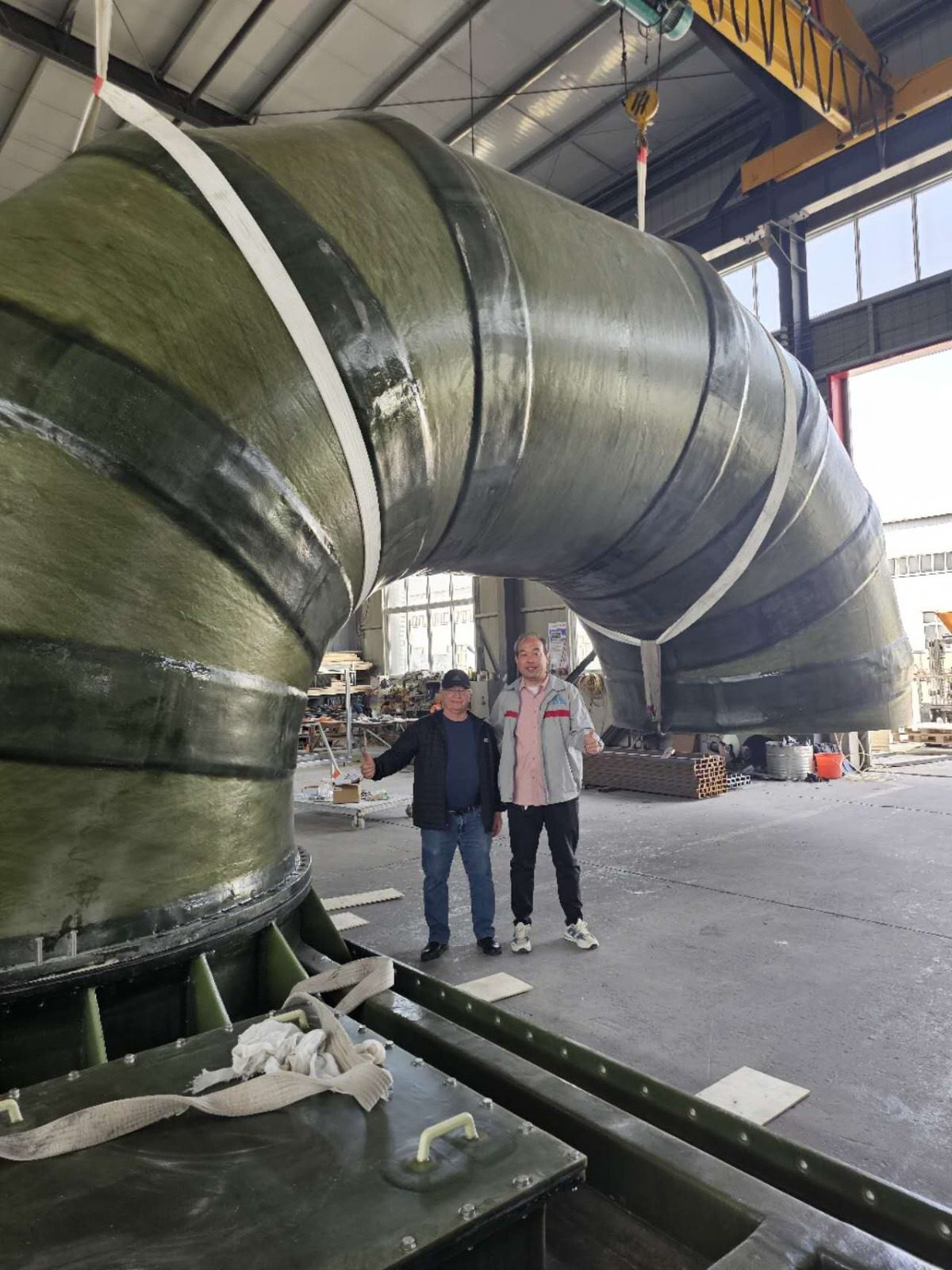
FRP and lined ductwork, expansion joints, and butterfly, louvre and guillotine dampers for smelter offgas — built in segments sized to fit a shutdown window. Valves & Dampers
Gas cleaning and scrubbing
Scrubbers, absorption towers, venturi and packed-bed systems in FRP, with liquid distributors, packing supports and demisters. FRP Products
Acid plant
Hot acid overflow tanks, vacuum receivers, pump tanks, acid coolers and lined pipework for sulphuric acid service at temperature. FRP Products
Acid and electrolyte pumping
Rubber-lined and alloy pumps, plus PTFE and PFA lined pipe, valves and expansion joints for concentrated acid and electrolyte. PTFE Lined Products
Tankhouse and electrowinning
Electrolyte circulation tanks, filter housings, cell hoods, walkways, gratings and covers in FRP for acid mist environments. FRP Products
Water treatment and effluent
Neutralisation and settling tanks, clarifier internals, thickeners and sludge handling for smelter effluent and scrubber blowdown. Solid / Liquid Separation
02 / Failure modes
Six ways a smelter eats its own equipment.
None of this is exotic. It is the ordinary consequence of hot, wet, acidic gas and an operating team that cannot take the plant down to correct someone else’s mistake. Every row below is a decision that has to be right before fabrication starts.
| What fails | Why it happens | What we do about it |
|---|---|---|
| Offgas duct fails at a flange or a stiffener | Thermal cycling and condensation. The acid dew point is reached at the cold spots first, and the cold spots are exactly the flanges and stiffeners. | Laminate schedule, resin and veil selected against the acid dew point and your actual gas analysis, with corrosion barrier thickness stated. Flanges and stiffeners are laminated in, not bolted on afterwards. |
| A vinyl ester tank fails early in hot acid | The resin was right for the acid but not for the temperature, or the cure was rushed in a hot shop. | Resin selected against concentration and temperature together, cure schedule and Barcol target fixed before layup begins, and Barcol readings recorded on the finished tank. |
| A damper seizes or leaks after one campaign | Dust build-up and thermal distortion on a blade and shaft that were designed for clean air. | Blade, shaft and bearing arrangement designed for the dust loading and temperature, seal air where the duty needs it, and the actuator sized on real break torque rather than the catalogue figure. |
| Lined pipe collapses under vacuum | Vacuum receivers and acid lines see negative pressure that conventional lined pipe was never built for. | Liner thickness increased for vacuum service, housing vent holes drilled and verified, and every item spark-tested at the correct voltage — see PTFE Lined Products. |
| Segments do not fit during the shutdown | Ductwork and tanks dimensioned from drawings that no longer match the plant as it was actually built. | We survey the existing structure, or work from your survey, trial-assemble segmented work in the shop, photograph it, and ship it match-marked against an erection drawing. |
| The paperwork does not match the equipment | Material and laminate certificates written up at the end of the job from memory rather than collected during it. | Laminate records, resin batch numbers, Barcol readings, weld maps and NDT results are collected as the work proceeds and bound into a data book before shipment. |
Almost every line on this list is settled during design and layup, not during erection. That is why we ask for the gas analysis, the acid concentration and the operating temperature before quoting, rather than pricing to a drawing and hoping.
03 / Delivered
Named clients, named equipment.
Glencore has been buying from us since 2016. These are three jobs you can ask us about — we will give you the contact rather than a logo.
Glencore
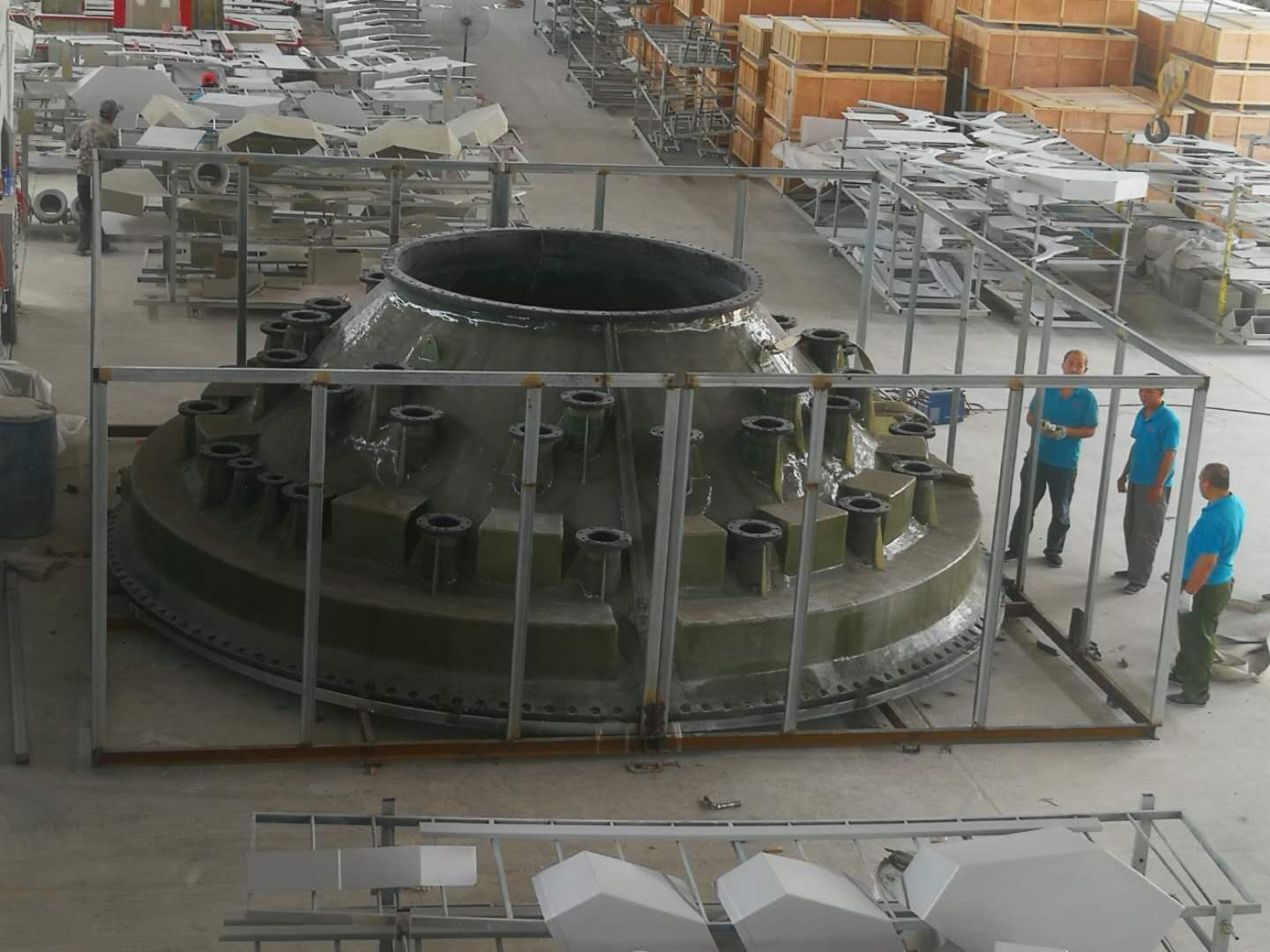
FRP cooling tower covers
Corrosion-resistant covers for a smelter cooling tower, fabricated in China and shipped in match-marked segments.
PASAR — Glencore Philippines
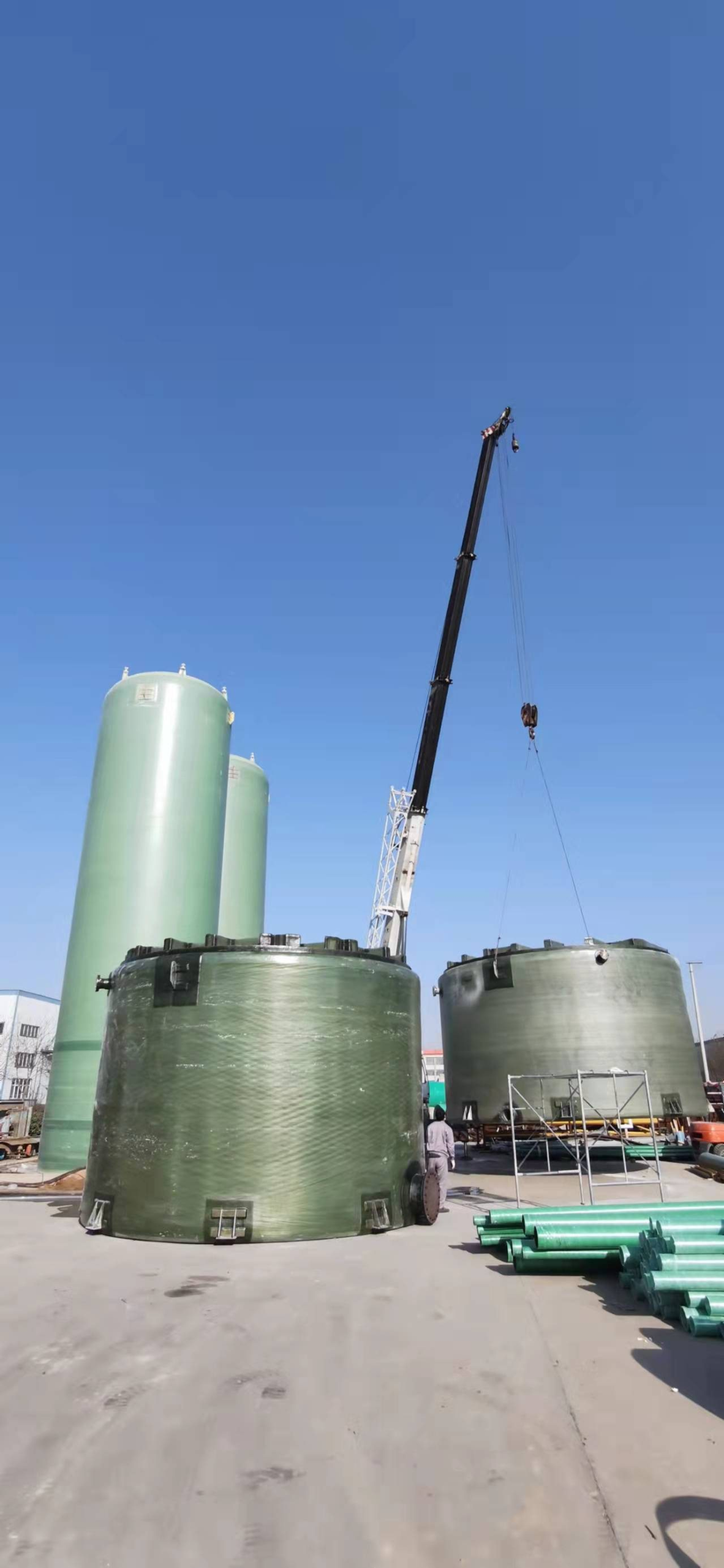
FRP pump tanks
Pump tanks for acid service at the PASAR copper smelter, built to the customer’s own laminate specification.
Morocco
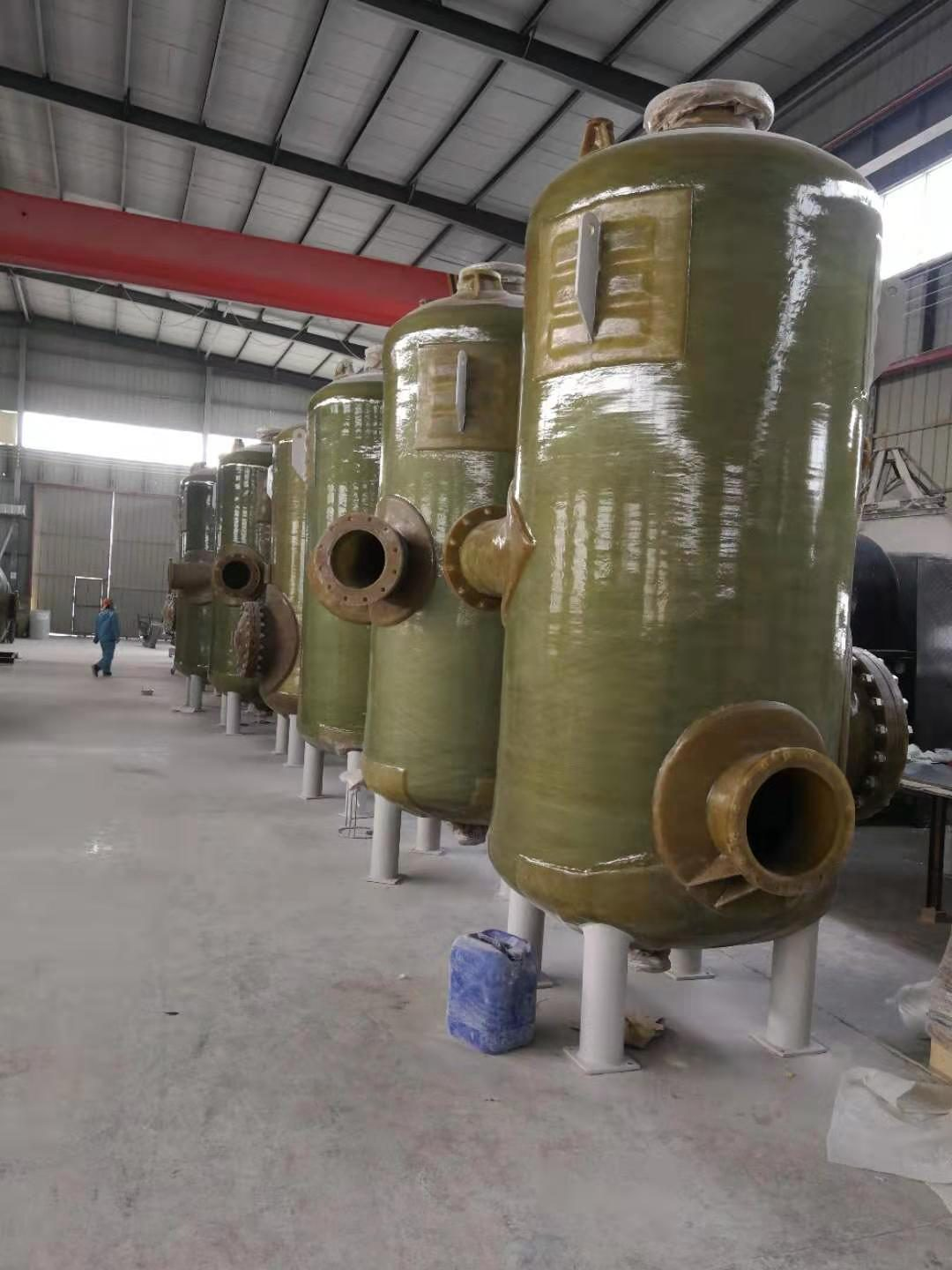
Hot acid vacuum receivers
Vacuum receivers for hot sulphuric acid service, designed for negative pressure and inspected before shipment.
04 / What to send us
Send the gas analysis before you send the drawing.
On a smelter the chemistry decides the price and the service life far more than the geometry does. Give us the duty and we will tell you what the equipment should be made of — including the times when the answer is not FRP.
- Gas or liquor analysis, concentration and pH
- Operating and design temperature, and the acid dew point if you know it
- Whether the item sees vacuum, and how much
- Dust loading and particle size for anything in a gas stream
- A general arrangement, or a survey of what is there now
- Shutdown window and the largest segment that can be lifted into place
- Your house laminate or lining specification, if you have one
- Inspection and test plan, and who witnesses it
- Documentation required in the data book
- Whether you want us to name and introduce the fabricator
05 / Questions
Smelting & refining — common questions
Which resin do you use for smelter offgas duty?
It depends on the gas analysis, the temperature, and whether the duct runs above or below the acid dew point. Vinyl ester with a suitable corrosion barrier is the usual answer, but we confirm it against your data and state the resin, veil, laminate sequence and cure schedule in the quotation rather than after the order.
Can you build ductwork and tanks in segments to suit a shutdown?
Yes, and it is most of what we do in this sector. We size segments to your lift capacity and access, trial-assemble them in the shop, photograph the assembly, then cut them apart and ship them match-marked with an erection drawing.
Do you supply alloy and lined steel as well as FRP?
Yes — rubber-lined and PTFE-lined steel, duplex and super duplex, titanium and Hastelloy where the duty needs it. We will also tell you when FRP is the wrong answer. Losing that order is cheaper for both of us than replacing the equipment in two years.
Who inspects it?
Our own engineers as standard, and we will engage SGS, BV, TÜV, Intertek or ABS on your behalf, or host your own inspector. Where we appoint the agency we disclose any commercial relationship with the fabricator in writing first.
Can you work to our house laminate specification?
Yes. Send it with the enquiry. If anything in it conflicts with the service conditions you have given us we will raise it before quoting, rather than build to a specification we believe is wrong.
What lead times should we plan for?
FRP ductwork and tanks 10–20 weeks depending on size and laminate; dampers and valves 12–18 weeks; lined pipe 10–16 weeks. Segmented work for a shutdown is scheduled backwards from your window, and we quote fabrication, inspection and sailing as separate legs.
Send the gas analysis, the acid, and the temperature.
Upload a general arrangement, a data sheet, or a photograph of what is corroding. We come back with materials, a laminate or lining specification, an inspection plan, a lead time and a price.