
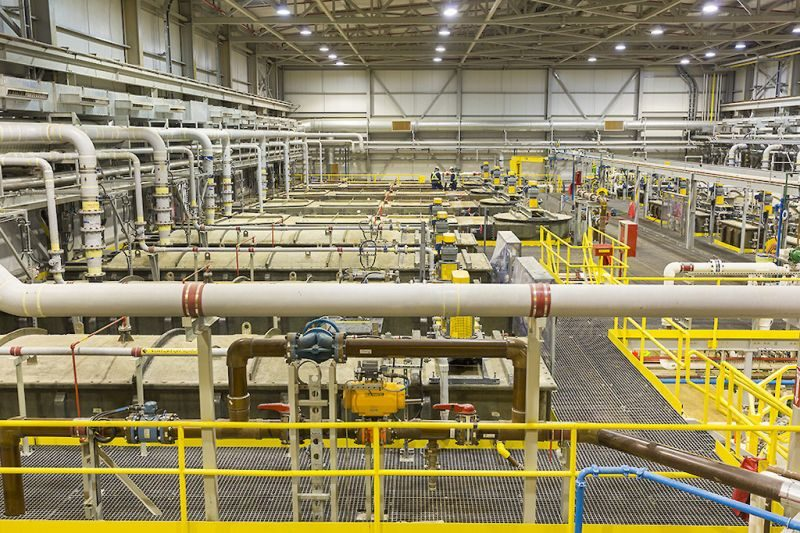
Home/Industries/Solvent Extraction (SX-EW)
Solvent Extraction & Electrowinning (SX-EW)
SBCCO-China supplies and inspects SX-EW plant equipment — mixer-settlers, coalescing internals, acid wash and stripping columns, PLS and raffinate tanks, electrolyte circulation, filters and lined pipework — in FRP, rubber-lined steel and duplex, engineered against your organic and aqueous chemistry rather than a catalogue.
01 / The circuit
The organic phase decides everything. Design around it.
An SX plant is a chemistry problem wearing a steelwork costume. Get the resin, the liner and the internals right for the organic and the aqueous and the equipment lasts; get them wrong and no amount of fabrication quality will save it.
Leach and PLS handling
Pond liners, launders, PLS transfer tanks, pumps and large-diameter piping for pregnant leach solution. Liquid Transmission
Mixer-settlers
Mixer boxes, settler tanks, weirs, picket fences, launders and coalescing internals in FRP or rubber-lined steel, dimensioned to your settler footprint. Solid / Liquid Separation
Organic handling and crud treatment
Organic storage and recovery tanks, crud treatment vessels, clay columns and filter housings for entrainment control. FRP Products
Acid wash and stripping columns
Wash and stripping columns with distributors, packing supports and demisters, built to the customer’s process design. FRP Products
Electrolyte circulation
Advance and spent electrolyte tanks, filters, heat exchangers and PTFE-lined pipework for hot acidic electrolyte. PTFE Lined Products
Tankhouse and electrowinning
Cell hoods, covers, walkways, gratings, acid mist extraction ducting and filter housings for the EW building. FRP Products
Reagent and utilities
Sulphuric acid storage and dosing, guar and reagent tanks, process water and lined transfer lines. Liquid Transmission
02 / Failure modes
Six things that go wrong in an SX plant, and where they are decided.
Every one of these is a specification decision made months before the equipment reaches site. None of them can be corrected during commissioning, which is exactly when they are usually discovered.
| What fails | Why it happens | What we do about it |
|---|---|---|
| FRP settler wall softens or blisters | Resin chosen for the aqueous side only, with no allowance for the organic diluent and extractant in continuous contact. | Resin, veil and corrosion barrier selected against the organic, the aqueous and the temperature together. If the extractant you use is aggressive to our standard laminate, we say so before quoting. |
| Picket fences and coalescers arrive out of alignment | Internals fabricated to a nominal drawing rather than to the settler as it will actually be built. | Internals dimensioned to the settler survey, trial-assembled in the shop and shipped match-marked so field fit-up is mechanical rather than corrective. |
| Crud accumulates faster than the plant can treat it | Under-sized crud handling, or launder and weir geometry that shears the organic instead of letting it separate. | Weir, launder and picket fence geometry built to your process design, and crud treatment vessels sized to the actual entrainment rather than a nominal figure. |
| Electrolyte lines fail at the flanges | Hot acidic electrolyte in lined pipe where the liner was trimmed flush and bonded instead of flared over the flange face. | Liner flared over both flange faces, vent holes drilled and verified, and every item spark-tested at the voltage specified for the liner thickness. |
| Rubber lining debonds in the tankhouse | Surface preparation or cure done to a schedule rather than to a standard, in a shop that was too cold or too humid. | Blast standard, adhesive system, cure schedule and holiday-test voltage agreed in writing before work starts, with spark test results recorded per item. |
| Equipment does not fit the module or the container | Segment sizes fixed by the fabricator’s convenience rather than by your transport and lift constraints. | Segment sizes set from your container envelope, road limits, altitude and site crane capacity at the quotation stage, with lifting and lashing drawings supplied. |
Send us the organic, the extractant, the aqueous chemistry and the operating temperature and most of this list disappears. We would rather have that conversation while the enquiry is open than after the plant is running.
03 / Delivered
Named clients, named equipment.
Copper, cobalt and uranium circuits in Chile, Peru, Mexico, the DRC, Zambia and Morocco. Three you can ask us about:
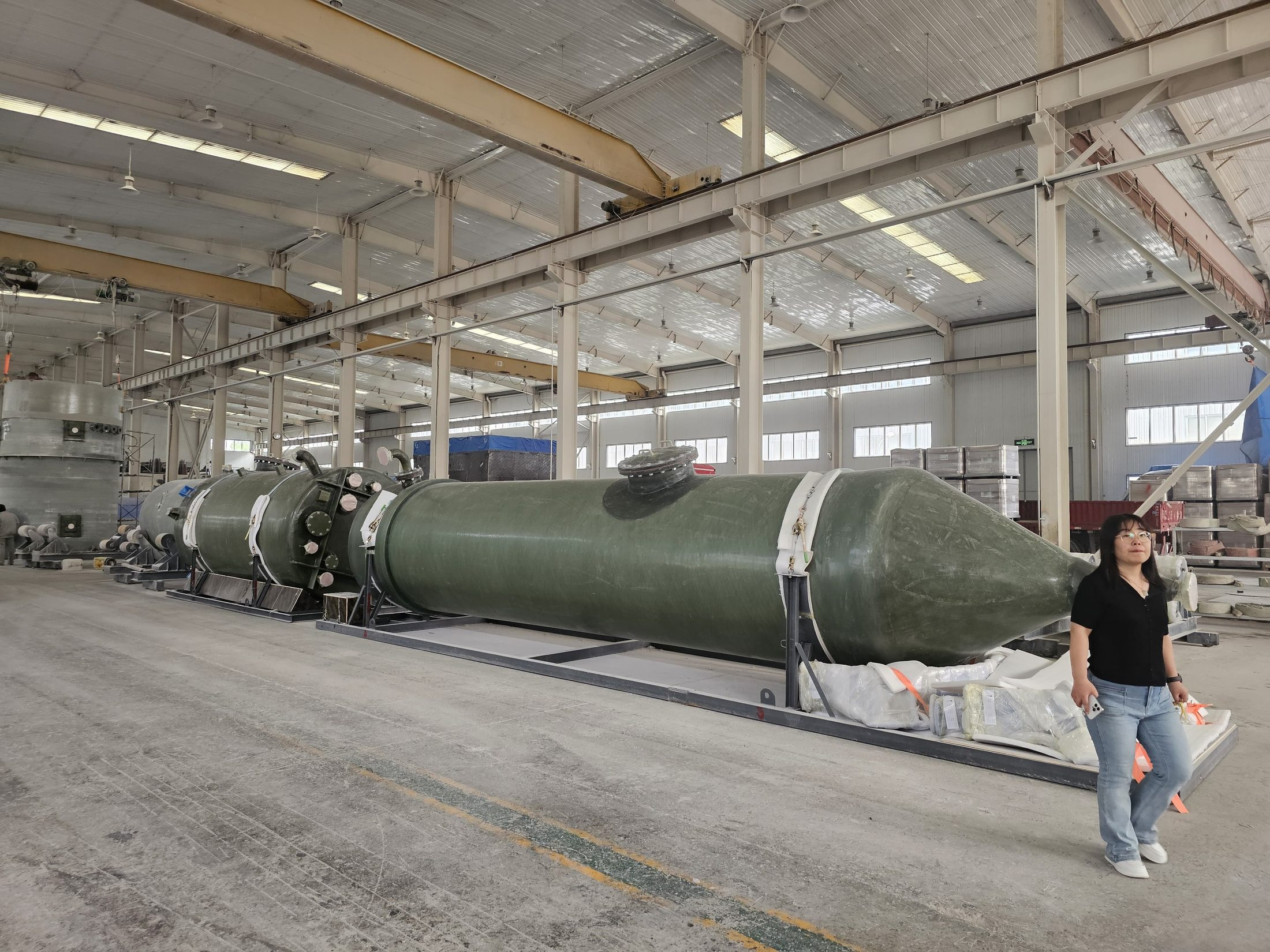
FLSmidth
FRP acid wash column
An acid wash column for a copper solvent extraction circuit, built to an FLSmidth design and inspected before shipment.
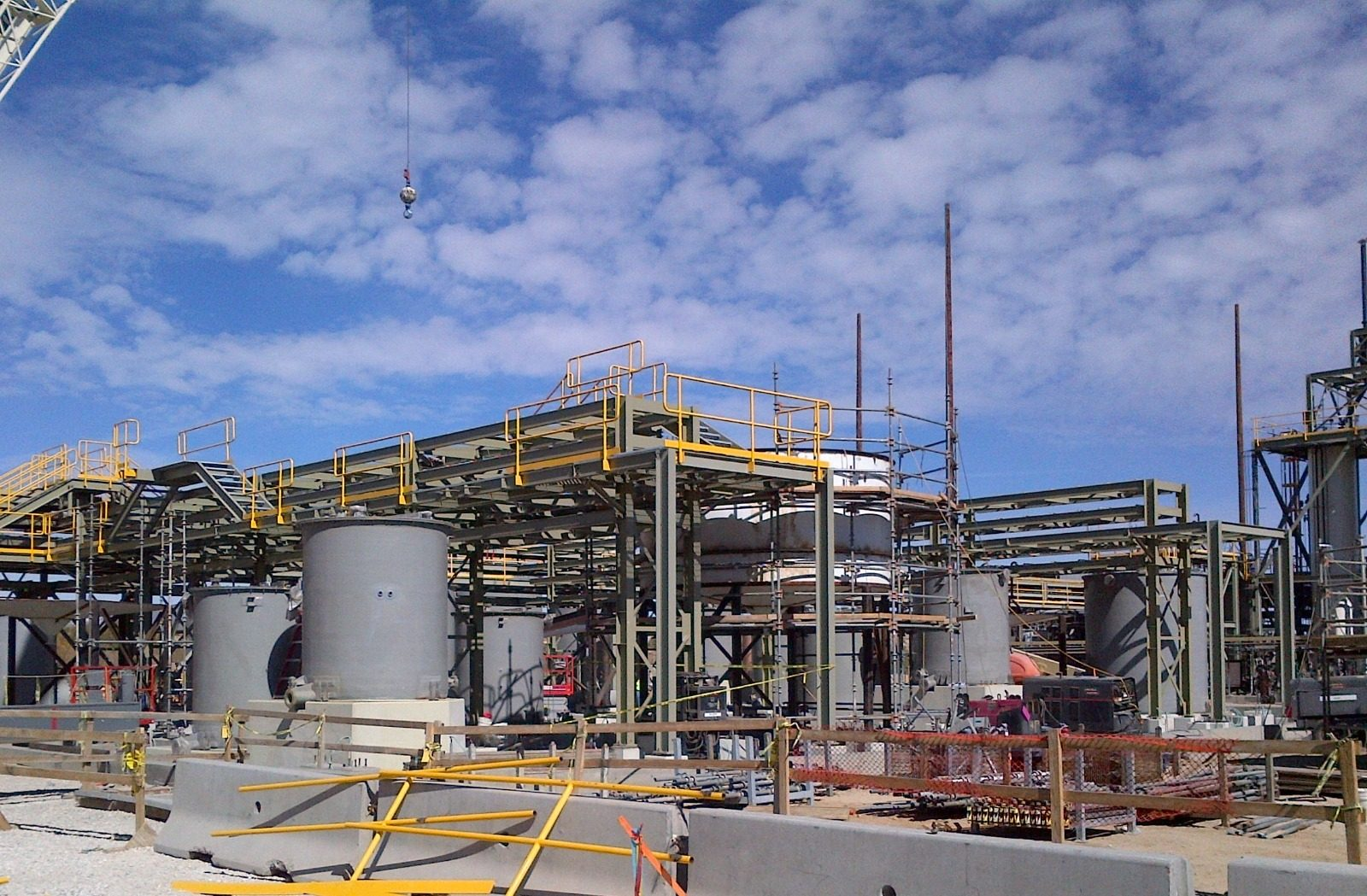
Freeport-McMoRan
FRP restart tanks
Corrosion-resistant restart tanks fabricated in China to the customer’s laminate specification and shipped complete.
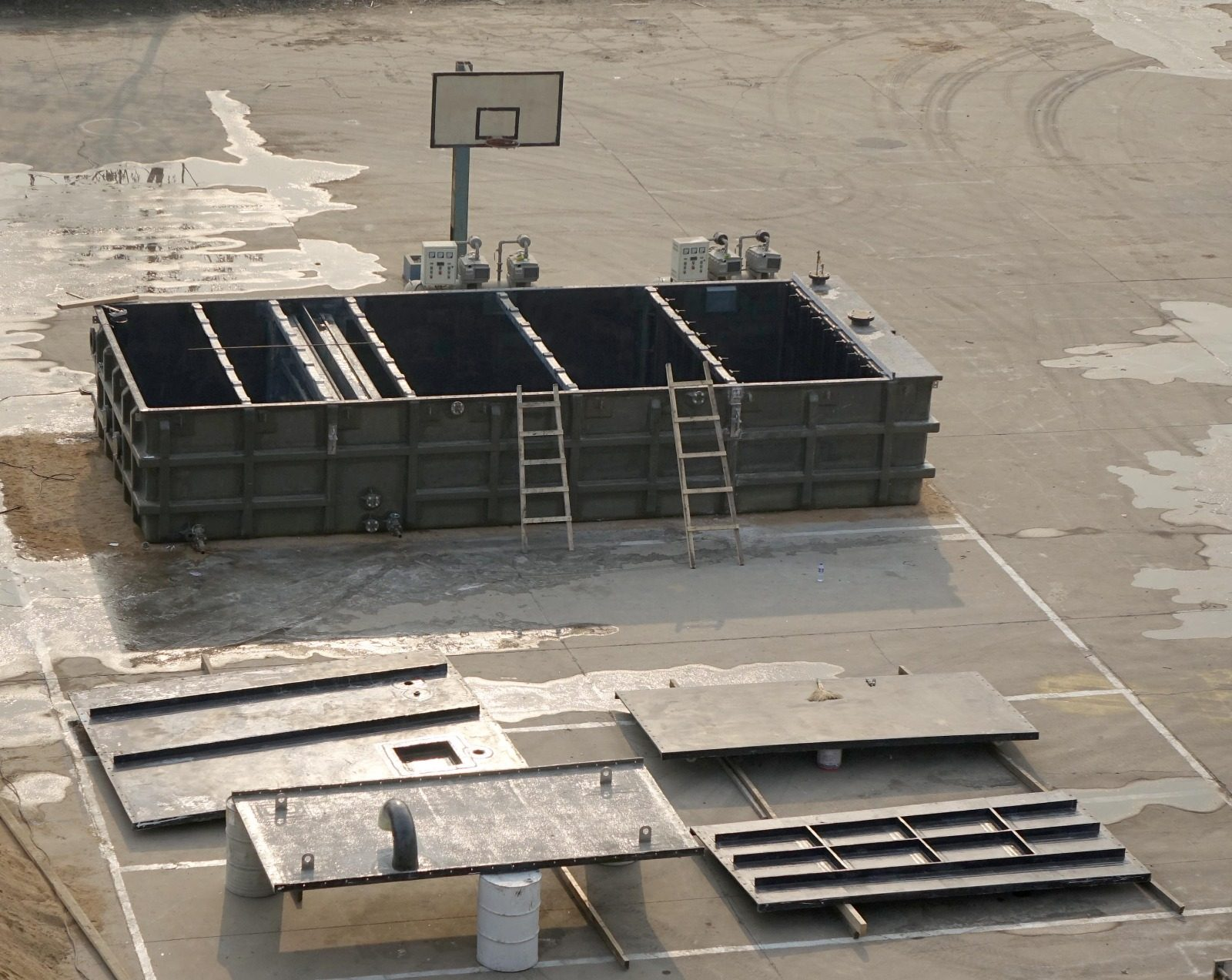
SX settler package
FRP settler and internals
Settler tank with weirs, picket fences and launders for a solvent extraction plant, trial-assembled and match-marked before shipping.
04 / What to send us
Send the chemistry, not just the drawing.
A settler drawing tells us how big it is. The organic, the extractant and the temperature tell us whether it will still be there in ten years. We need the second one first.
- Organic system: diluent and extractant, and the concentration
- Aqueous chemistry: acid, copper or cobalt tenor, chlorides, pH
- Operating and design temperature, and the maximum excursion
- Settler and mixer dimensions, or a survey of the existing basin
- Flow rates and organic-to-aqueous ratio
- Your house laminate or lining specification, if you have one
- Entrainment and crud handling expectations
- Inspection and test plan, and who witnesses it
- Transport constraints: container envelope, road limits, altitude, crane capacity
- Whether you want us to name and introduce the fabricator
05 / Questions
Solvent extraction — common questions
Which resin do you use for SX duty?
Vinyl ester is the usual answer for raffinate and electrolyte service, but the extractant and diluent matter as much as the acid. We confirm the resin, veil, laminate sequence and cure schedule against your actual organic system and state them in the quotation.
Can you supply internals for settlers built by someone else?
Yes, and it is a large part of our SX work. We need a survey of the settler and your process design. We return a dimensioned proposal drawing for approval, trial-assemble the internals in the shop, and ship them match-marked.
Do you supply complete mixer-settler trains?
We supply the tanks, internals, weirs, launders and coalescing packs, and can coordinate mixers, pumps and instrumentation on the same order. The process design stays with your engineer — we build to it and tell you when something in it will not fabricate as drawn.
What about rubber-lined steel instead of FRP?
Both are available and we will tell you which we think is right. Rubber-lined steel suits some tankhouse and pumping duties better; FRP usually wins on weight, corrosion margin and field repair. The decision is made against your chemistry and your maintenance capability, not our preference.
Can you handle uranium and cobalt circuits as well as copper?
Yes. The equipment is the same family; the chemistry and the documentation requirements differ. Tell us the circuit and any regulatory or radiological requirements at the enquiry stage so they are priced in rather than discovered later.
What lead times should we plan for?
FRP settlers and columns 12–22 weeks depending on size and laminate; internals 10–16 weeks; lined pipework 10–16 weeks. We quote fabrication, inspection and sailing separately so you can see where the time actually goes.
Send the organic, the aqueous and the temperature.
Upload a process data sheet, a settler survey or a photograph of what is failing. We come back with a resin or lining recommendation, a dimensioned proposal, an inspection plan and a price.