
Home/Industries/Cement
Cement Plant Equipment from China
SBCCO-China supplies and inspects cement plant equipment and wear parts — crushers, raw and finish mill components, girth gears and pinions, mill liners, kiln and cooler castings, ducting, dampers and dust handling — cast to certified chemistry, machined to your drawing, and inspected in China before it ships.
01 / The circuit
A cement plant is an abrasion problem that never stops running.
Nothing in this industry fails suddenly. It wears, and it wears on a schedule you have to plan around, because the kiln does not stop for a late delivery. Almost everything we ship into cement is either a wear part or a spare that has to be in the store before it is needed.
Quarry and primary crushing
Jaw, cone, impact and hammer crushers, plus jaw plates, blow bars, hammers, breaker plates and grates in Mn and high-chrome iron. Crushing & Milling
Raw material handling
Chutes, hoppers, bins, feeders, apron and belt conveyor components, with bolted or welded wear liners. Custom Fabrication
Raw milling
Vertical and ball mill components — rollers, tables, tyres, grinding rings, mill shells, liners and diaphragms — cast, hardfaced and machined to drawing. Castings & Forgings
Kiln, preheater and cooler
Kiln tyres and support rollers, girth gears and pinions, grate plates, cooler castings, burner and hood components in heat-resistant alloys. Castings & Forgings
Finish milling and separation
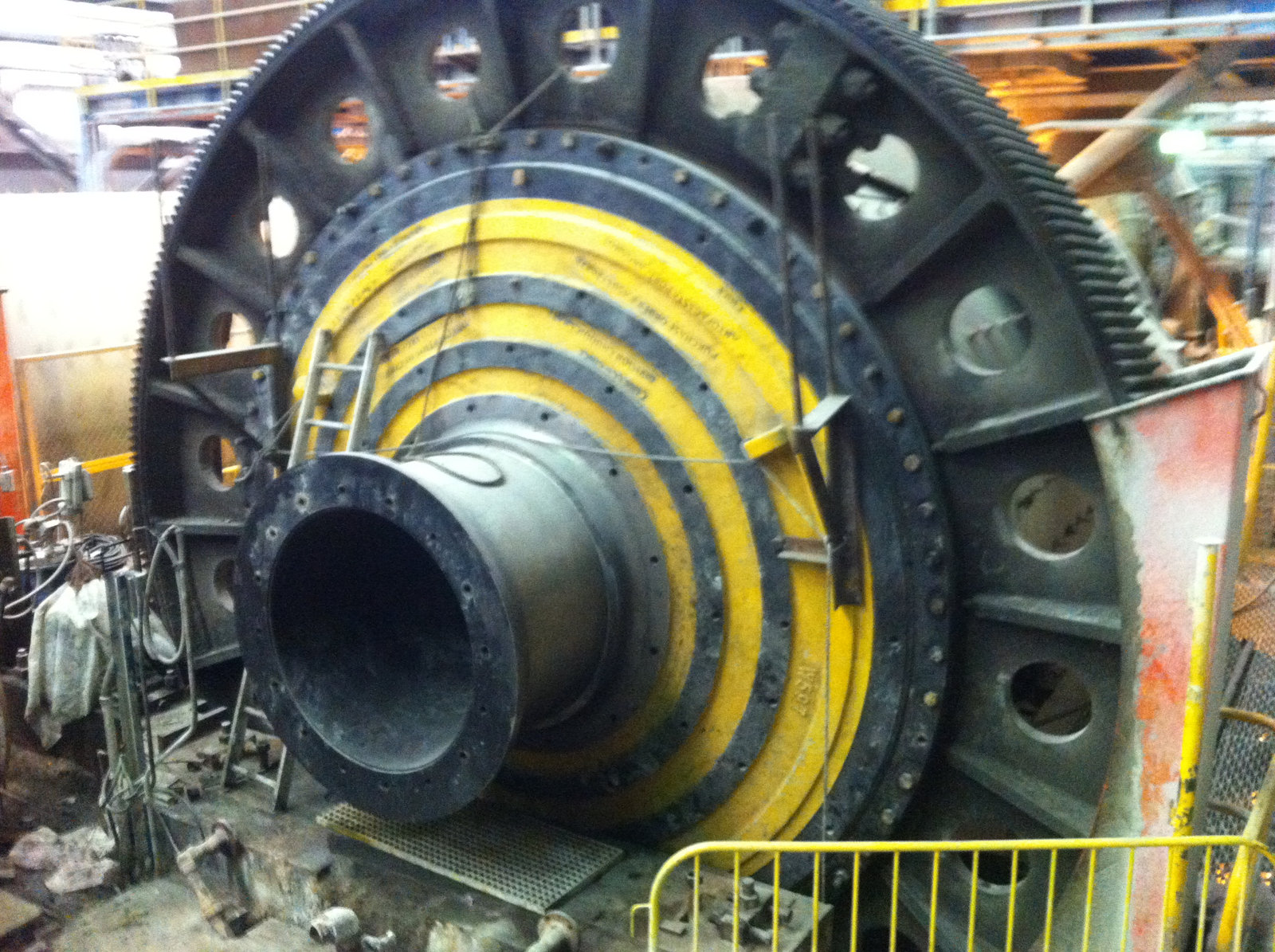
Mill shells and heads, liner sets, diaphragms, girth gears to 9 m hobbed to AGMA 10 / DIN 8, pinions, and separator wear components. Crushing & Milling
Gas handling and dust control
Ducting, dampers, cyclones, fan housings and wear liners for hot dusty gas, plus filter housings and hoppers. Valves & Dampers
Utilities, packing and dispatch
Compressed air receivers, water treatment, pumps and piping, plus structural fabrication for packing and dispatch areas. Steel Process Equipment
02 / Failure modes
Wear parts fail for two reasons. Both are decided in the foundry.
A liner that lasts half as long as it should has almost always failed because the alloy was not what the certificate said, or because the geometry was close but not close enough. Neither is visible when the part arrives on a truck.
| What fails | Why it happens | What we do about it |
|---|---|---|
| A wear part lasts half as long as the last one | The alloy was substituted. Manganese or chromium content out of range does not change how the casting looks. | Every heat spectrometer-tested with the report carrying the heat number stamped into the casting itself, and the stamp photographed on the part. Out-of-range heats do not become your parts. |
| Liner bolts slacken after the first weeks | Torque relaxation once the liner beds in — normal, but rarely warned about. | Hardness-tested bolting supplied with a written re-torque schedule, and liner sets match-marked to an installation sequence. |
| A girth gear runs hot or noisy | Tooth contact pattern never verified, or the gear was aligned to a mill shell that is no longer round. | Tooth contact and backlash recorded and photographed in the shop, and shell dimensions confirmed before the gear is cut where we are also supplying or measuring the shell. |
| A casting cracks in service | Repair welds carried out and never declared, or a heat treatment cycle skipped to make a delivery date. | Repair map required for every casting — location, depth, procedure, welder qualification, post-weld heat treatment — with the excavation photographed before it is filled. Furnace charts photographed at temperature with the date visible. |
| A reverse-engineered spare does not fit | Measured from a worn part with no one approving what the as-new geometry should be. | Dimensional reconstruction issued for your written approval, showing which surfaces we inferred rather than measured, before any pattern is cut. |
| The spare arrives after the part it replaces failed | Lead time quoted as a single number, so nobody could plan around the real production sequence. | Fabrication, inspection and sailing quoted as separate legs, and repeat wear items scheduled against your change-out interval rather than reordered each time from scratch. |
Cement buyers order the same parts again and again. Once a pattern exists and the chemistry is proven, repeat orders should be routine — which is why we keep the patterns, the heat records and the dimensional reports rather than starting fresh each time.
03 / Typical scope
What we ship into cement.
Cemex is on our client list. Most cement work is repeat wear-part supply rather than a nameable project, so what we show here is the equipment — ask us and we will arrange a reference directly.
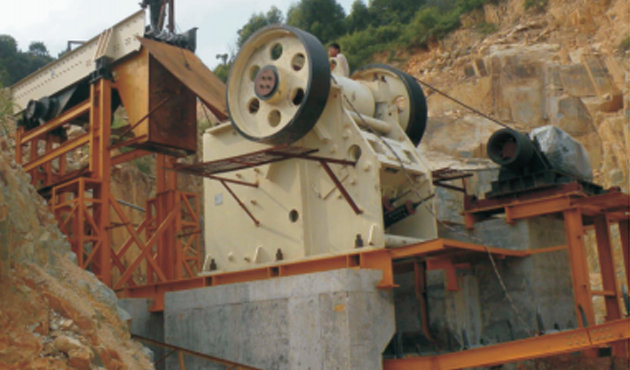
Comminution
Crushers and wear parts
Jaw, cone and impact crushers with jaw plates, mantles, concaves and blow bars in Mn13 to Mn22 and high-chrome iron.
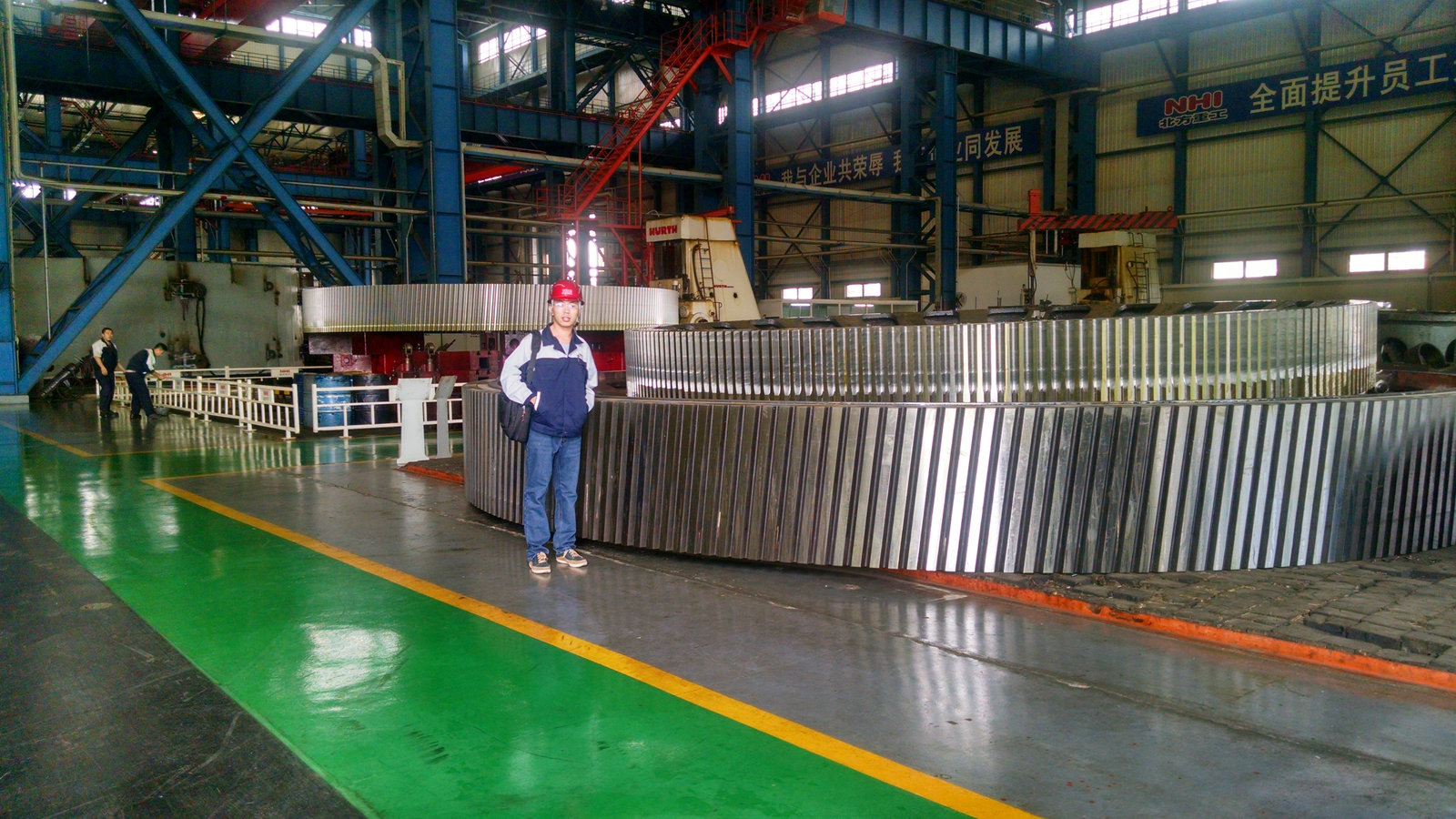
Grinding
Girth gears and pinions
Split and single-piece girth gears to 9 m diameter, hobbed to AGMA 10 / DIN 8, with the tooth contact pattern recorded.
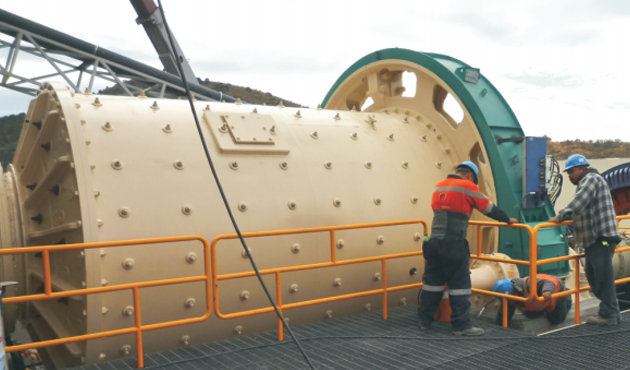
Mill components
Mill shells and liners
Rolled and welded mill shells with machined flanges, plus rubber, high-chrome and composite liner sets with NDT records.
04 / What to send us
Send the part, the print, or the machine number.
Most cement enquiries reach us as a photograph of something worn out and a plant equipment number. That is enough to start — we will tell you what still has to be measured.
- The worn part, or photographs with measurements at the points we specify
- A drawing or OEM print if you hold one
- Machine make, model and equipment number
- Current wear life and how often you change the part out
- Feed material, abrasion index and typical particle size
- Operating temperature for anything near the kiln or cooler
- Alloy or hardness specification if you have a house standard
- Change-out date you are working towards
- Inspection requirements and any documentation you need
- Whether you want us to name and introduce the foundry
05 / Questions
Cement — common questions
Can you make parts that fit FLSmidth, KHD, Loesche or Polysius equipment?
We supply parts dimensionally interchangeable with widely used cement machinery, made from your worn part, a drawing you hold, or published fitting dimensions. We do not put OEM brand names on castings or documents and we do not represent parts as OEM-manufactured. Give us the machine and we confirm fit in writing before you order.
What if we have no drawing at all?
Send the worn part, or photographs with measurements at the points we specify. We reconstruct the as-new geometry, issue the reconstruction for your written approval — showing which surfaces we inferred rather than measured — and only then cut a pattern. The reconstruction is yours to keep.
How large a girth gear can you supply?
Hobbing to 9,000 mm outside diameter, module 30, to AGMA 10 or DIN 8, cast or fabricated blank, split or single piece. Tooth contact pattern and backlash are recorded and photographed before shipment.
How do we know the manganese steel is really what was ordered?
Every heat is spectrometer-tested and the report carries the heat number stamped into the casting. You can have the sample independently re-tested, or appoint SGS, BV, TÜV or Intertek at our facility — we schedule and host the visit.
Can you hold patterns for repeat orders?
Yes. Patterns we cut are quoted separately, usually amortised over the first order, and stored at the foundry under your name. We keep the heat records and dimensional reports too, so a repeat order is a repeat, not a fresh start.
What lead times should we plan for?
Wear parts in existing patterns 8–14 weeks; new patterns add 3–5 weeks; girth gears and mill shells 16–24 weeks. We quote fabrication, inspection and sailing separately so you can plan the change-out properly.
Send the worn part, or its number.
Upload a photograph, a drawing or just the machine and equipment number. We come back with alloy options, a dimensional plan, an inspection scope, a lead time and a price.